BCCI stands for the Board of Control for Cricket in India, and it is often called the most powerful cricket authority in the world. But the question many fans still ask is — Who actually runs BCCI?
Is it the President? The Secretary? The Government? Or the people behind the scenes?
This article explains everything clearly, step-by-step in a simple manner.
Table of Contents
What is BCCI and Why is it So Powerful?
Unlike most other countries, Indian cricket is not managed directly by the government.
Instead, BCCI operates as an independent sports body. It controls:
- Indian National Men’s & Women’s Teams
- Domestic cricket tournaments
- Player contracts & payments
- Broadcasting and sponsorship deals
- The Indian Premier League (IPL)
Because cricket is like a religion in India and generates huge revenue, BCCI has become a financial powerhouse.
Its decisions affect not only Indian cricket but also international cricket.
Who Owns BCCI?
One important thing to understand:
➡️ The Government of India does not own BCCI
➡️ No single person owns BCCI
➡️ It is run by members who represent different cricket associations across India
These members vote and elect the leadership team that manages the board.
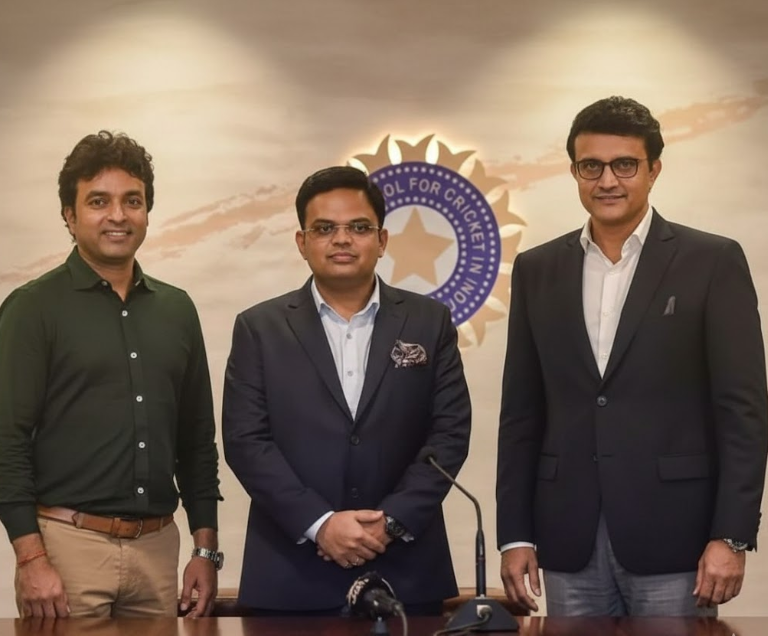
Governance Structure of BCCI
To understand who runs BCCI, let’s look at the structure:
Office Bearers (Top-level Decision Makers)
These are the most powerful roles:
- President
- Secretary
- Vice Presidents (from 5 zones of India)
- Treasurer
- Joint Secretary
These positions are chosen through internal elections.
Each leader has specific responsibilities — for example, the Secretary handles daily administration, while the President represents the board publicly and leads key meetings.
How Elections and Power Work Inside BCCI
Each Indian state has a cricket association. Some big states even have two or more.
These state associations are full members of BCCI and have voting power.
They vote to elect BCCI leaders.
Because of this system:
- State politics often influence cricket politics
- Groups form alliances to gain voting majority
- Leadership changes depending on these power equations
So, elections decide who sits on the throne, but real influence comes from who controls the votes behind the scenes.
Who Runs the Daily Operations of BCCI?
This is where the Apex Council and working committees come into play.
They manage:
- Selection committees (who picks Indian teams)
- Tournament operations
- Contracts & financial planning
- Player development programs
- IPL and other major events
These committees ensure that decisions are executed on time — everything from the IPL schedule to Ranji Trophy logistics.
So not only top leaders, but many internal groups collectively run the BCCI machine.
Why BCCI is Called India’s Cricket Government
Even though it’s a private organization, BCCI:
- Controls the sport nationwide
- Sets rules & policies for players
- Distributes funding to state associations
- Makes decisions affecting millions of fans
It is richer than most national sports federations in the world.
Money = power… and BCCI has plenty.
The success of the IPL has made BCCI’s financial position even stronger.
That’s why cricket experts say:
“Where BCCI goes, world cricket follows.”
The Real Power Behind BCCI
Power in BCCI comes from three factors:
✅ 1️⃣ Control Over Money
IPL revenue, sponsorships, broadcasting rights — all managed by BCCI.
This money goes back to states and players, earning loyalty and influence.
✅ 2️⃣ State Association Politics
If someone wins support of most state members → They run BCCI.
✅ 3️⃣ Global Cricket Position
India is the biggest cricket market.
This gives BCCI huge control inside ICC decisions.
So, even though BCCI has a clear constitution, power isn’t always just about the official role — influence from networks and alliances matters a lot.
Is the Indian Government Involved in BCCI?
BCCI is not controlled by the Government of India.
However, the government influences:
- Tax laws and legal status
- Use of stadiums and facilities
- International tours and foreign relations (visas, security etc.)
Sometimes, courts and new sports governance rules can force BCCI to improve transparency and fairness.
So while the government does not run BCCI, it definitely affects how BCCI runs.
BIG Challenges in “Who Runs BCCI?”
Even the best system has issues. BCCI faces major governance challenges:
| Challenge | What it Means |
|---|---|
| Lack of transparency | Decisions often remain internal |
| Power concentration | Few associations control most influence |
| Conflicts of interest | Administrators linked to IPL teams in past |
| Accountability demand | Fans wants clear systems and fairness |
Reform attempts have been made over the years, but complete change takes time.
Why It Matters Who Runs BCCI
Because leadership decisions impact:
✅ Growth of young talent
✅ Women’s cricket development
✅ India’s World Cup strategies
✅ Stadium infrastructure
✅ Domestic players’ careers
One strong decision can take Indian cricket to new heights.
One wrong decision can hurt millions of dreams.
That is the power BCCI holds.
Conclusion: So… Who Really Runs BCCI?
The simple answer:
BCCI is run by elected leaders, influenced by state associations, strengthened by money, and followed by the world.
There is no single boss — it is a combination of:
- Elected office bearers
- Voting power of state members
- Commercial success of IPL
- National passion for cricket
Because of this unique mix, BCCI remains one of the strongest and most influential sports bodies in the world.