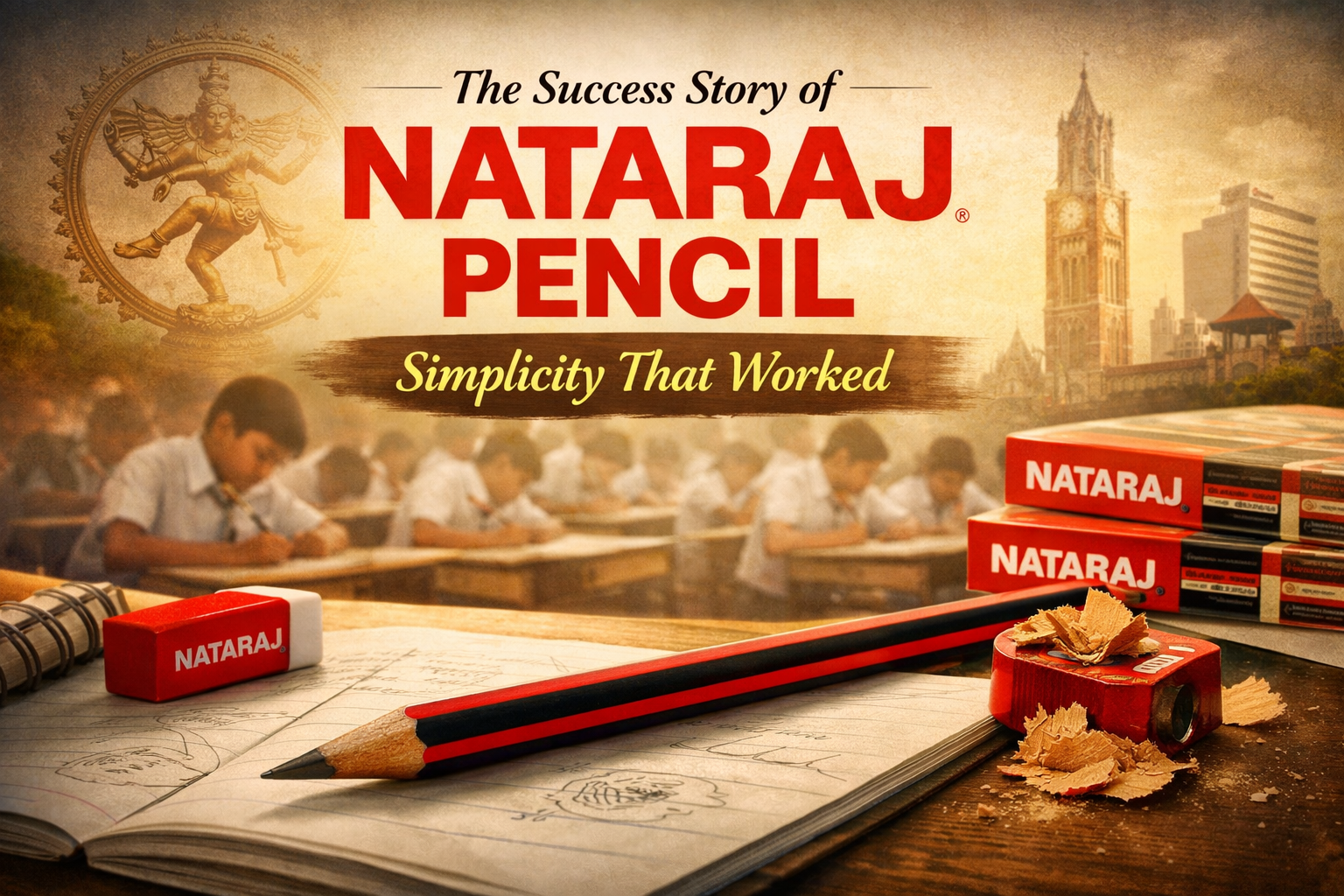
Nataraj Pencil represents one of the most remarkable success stories in India’s stationery industry, proving that simplicity, consistency, and affordability can build a timeless brand. For decades, this pencil has quietly shaped the learning journey of millions of Indian students, becoming an essential part of classrooms, exam halls, and everyday writing.
In a market filled with flashy products and constant innovation, the brand chose a different path—one rooted in trust, reach, and reliability. This article explores how a simple writing tool evolved into a national icon and what businesses can learn from its long-term success.
The Early History of Nataraj Pencil and Its Origins
The story of Nataraj Pencil begins in 1958, when Hindustan Pencils Pvt. Ltd. was founded in Mumbai by Rameshwar Das Lohia and Gopal Das Lohia. At the time, India was still developing its industrial base, and quality stationery products were either imported or expensive for the average household.
The founders identified a clear gap in the market: Indian students needed a durable, reliable, and affordable pencil that could be produced locally at scale. This vision laid the foundation for a manufacturing-driven company focused on efficiency rather than luxury.
The brand name “Nataraj” was inspired by Lord Shiva’s cosmic dance, symbolizing creativity, rhythm, and balance—values closely aligned with education and expression.
Why Simplicity Became the Core Strength of Nataraj Pencil
One of the most defining factors behind the success of Nataraj Pencil is its commitment to simplicity. Instead of chasing trends or frequent redesigns, the brand focused on delivering a consistent writing experience year after year.
The classic red-and-black design remained largely unchanged, creating instant recognition and familiarity. This visual consistency helped build trust across generations of users, many of whom were introduced to the pencil during their earliest school years.
By avoiding unnecessary features, the company kept production costs low and quality high—an approach perfectly suited to India’s price-sensitive market.
Nataraj Pencil and the Power of Mass Manufacturing

A major competitive advantage for Nataraj Pencil came from large-scale, in-house manufacturing. Hindustan Pencils invested heavily in production facilities that allowed tight control over quality, supply, and costs.
This operational efficiency made it possible to produce millions of pencils daily while maintaining uniform standards. As a result, the brand could serve massive demand without compromising performance, something smaller competitors often struggled with.
This focus on scale over short-term profit played a crucial role in long-term market dominance.
Distribution Strategy That Built a National Presence
How Nataraj Pencil Reached Every Indian Student
Rather than relying heavily on advertising, Nataraj Pencil prioritized availability. The company built one of the widest distribution networks in the Indian stationery market, ensuring the product was accessible in cities, towns, and villages alike.
From small roadside shops to large stationery wholesalers, the pencil became the default choice simply because it was always within reach. This omnipresence created habitual buying behavior, especially among students and parents.
Over time, availability itself became a form of marketing.
Trust and Reliability as Brand Currency
Trust is not built overnight, and Nataraj Pencil earned it through decades of consistency. Students relied on it during examinations because of its smooth lead, minimal breakage, and legible writing.
Teachers and parents recommended it because it delivered predictable results at a reasonable price. This trust-based relationship reduced the need for aggressive promotions and helped create organic brand loyalty.
In many ways, the product’s performance spoke louder than any advertisement.
Nataraj Pencil in Indian Classrooms

The presence of Nataraj Pencil in Indian classrooms is almost universal. For many students, it was the first writing tool they ever used. This early emotional connection strengthened brand recall and preference well into adulthood.
Even as digital devices entered education, pencils remained essential for foundational learning. The brand’s association with education ensured its continued relevance despite technological shifts.
This deep-rooted connection with learning is one of the brand’s most valuable intangible assets.
Business Strategy Behind the Success of Nataraj Pencil
Volume Over Premium Pricing
Instead of positioning itself as a premium product, Nataraj Pencil adopted a volume-driven business model. Thin margins combined with massive sales volumes created sustainable profitability.
This approach aligned perfectly with India’s demographic reality, where affordability often determines market leadership.
Focused Brand Architecture
Rather than confusing consumers with too many variants, the brand maintained clarity. Each product served a clear purpose, reinforcing trust rather than experimentation.
This disciplined approach prevented brand dilution.
Competition and Market Leadership
The Indian stationery market has always been competitive. However, Nataraj Pencil retained leadership by staying focused on its core strengths—price, reach, and reliability.
While competitors explored premium segments or niche offerings, the brand continued serving the mass market, where demand remained constant and scale mattered most.
This clarity of positioning helped it weather market changes over decades.
Evolution Without Losing Identity
Although the core product remained unchanged, Nataraj Pencil gradually expanded into complementary stationery items such as erasers, sharpeners, and color pencils.
Importantly, every new product followed the same guiding principles: affordability, durability, and accessibility. This ensured that expansion strengthened the brand instead of diluting it.
Lessons Businesses Can Learn from Nataraj Pencil
The journey of Nataraj Pencil offers timeless lessons:
- Simplicity can outperform innovation
- Consistency builds generational trust
- Distribution can be more powerful than advertising
- Mass-market focus creates long-term stability
These lessons are especially relevant in emerging markets.
Why Nataraj Pencil Remains Relevant Today
Despite the rise of digital learning tools, Nataraj Pencil continues to thrive. Writing, drawing, and early education still begin with a pencil, ensuring continued demand.
The brand’s ability to remain relevant without drastic reinvention highlights the strength of its foundational strategy.
Conclusion: A Brand Built on Simplicity That Truly Worked
The success story of Nataraj Pencil is a powerful reminder that great brands are not always built through disruption or constant innovation. Sometimes, they are built through patience, discipline, and unwavering focus on fundamentals.
By staying true to its purpose—providing affordable, reliable writing tools—the brand transformed an everyday commodity into a symbol of trust and education across India.
In a fast-changing business world, this story proves that simplicity, when executed consistently, truly works.