Steve Jobs — a name that symbolizes innovation, resilience, and vision. From humble beginnings to building one of the world’s most valuable companies, his journey is nothing short of legendary. The story of Steve Jobs is a timeless tale of passion, creativity, and persistence — a true example of turning failure into fortune.
Table of Contents
Early Life and the Spark of Innovation
Born on February 24, 1955, in San Francisco, Steve Jobs was adopted by Paul and Clara Jobs. From a young age, he showed a deep curiosity about technology and design. Even though he wasn’t the most disciplined student, his imagination and drive for perfection stood out. He attended Reed College but dropped out after just six months — yet he continued attending creative classes, especially calligraphy, which later influenced Apple’s elegant design philosophy.
During his teenage years, Steve Jobs met Steve Wozniak, a brilliant engineer. Their friendship became the foundation of what would eventually revolutionize the world — the birth of Apple.
The Birth of Apple: A Garage, a Vision, and a Dream
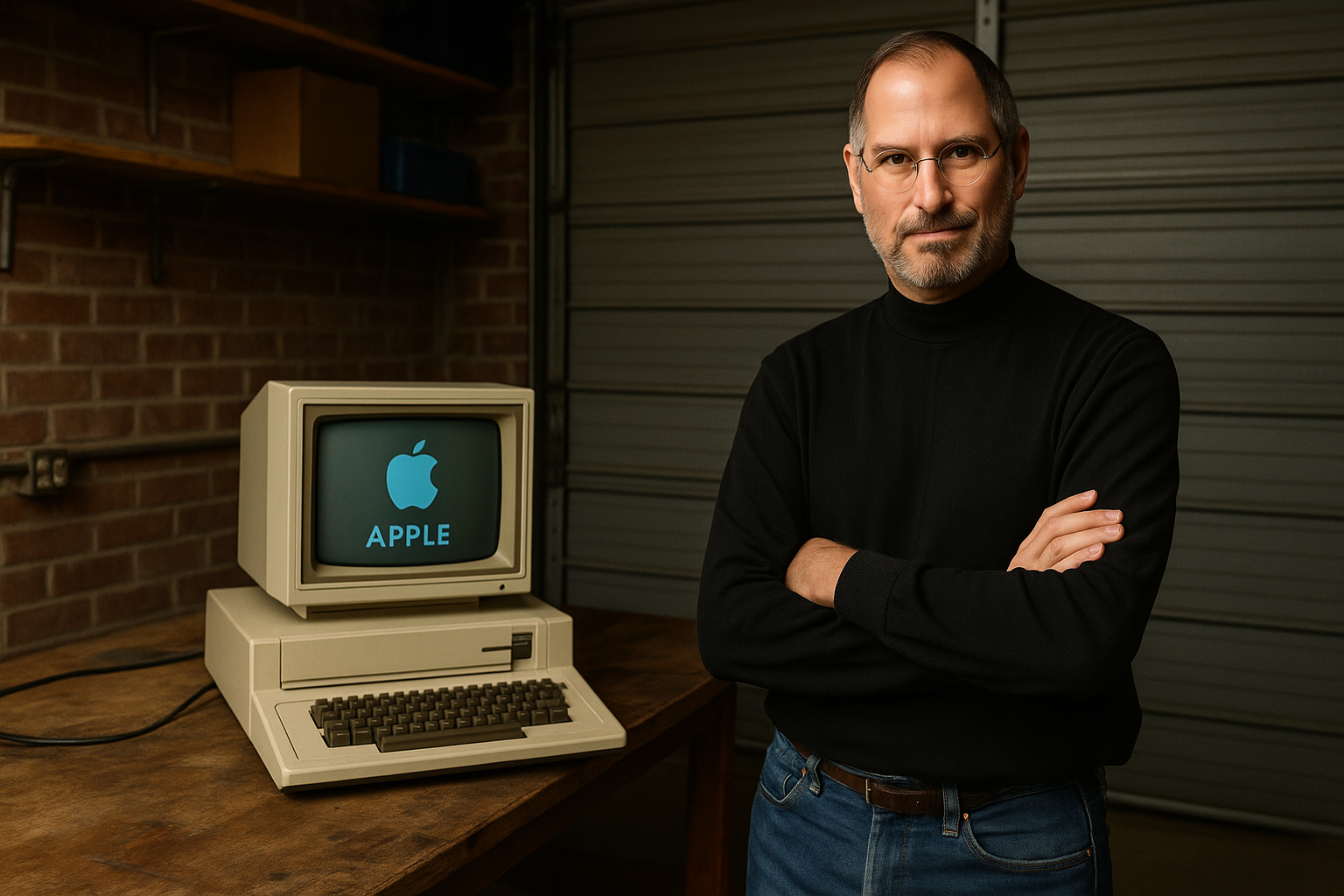
In 1976, Steve Jobs and Wozniak founded Apple Computer Inc. in a small garage in Los Altos, California. They didn’t have fancy equipment or massive funding, but they had something far more powerful — an unshakable belief in their idea. Together, they created the Apple I, a simple personal computer built by hand and sold to local computer stores.
Soon after, the Apple II became a massive hit — one of the first successful mass-produced personal computers. With its colorful graphics and easy-to-use interface, Apple quickly became a household name. By age 25, Steve Jobs was already a millionaire and one of the most recognized young entrepreneurs in America.
The Rise and the Fall
However, the journey of Steve Jobs was far from smooth. As Apple grew, internal tensions developed. Jobs’ perfectionism and demanding leadership style clashed with other executives. In 1985, just nine years after founding the company, Steve Jobs was forced out of Apple — a devastating blow that could have ended his career.
But instead of giving up, Jobs turned this failure into an opportunity. He once said:
“Getting fired from Apple was the best thing that could have ever happened to me. The heaviness of being successful was replaced by the lightness of being a beginner again.”
NeXT and Pixar: Reinventing Success
After leaving Apple, Steve Jobs founded NeXT, a new computer company focused on high-end workstations for business and education. Though NeXT didn’t achieve huge commercial success, its technology became the foundation for Apple’s future software, including macOS.
Around the same time, Jobs acquired a small animation studio called Pixar from George Lucas. Under his leadership, Pixar created Toy Story — the world’s first fully computer-animated film — and went on to produce blockbuster hits like Finding Nemo and The Incredibles. Pixar’s success not only revolutionized animation but also established Jobs as a visionary beyond the tech industry.
The Triumphant Return to Apple
In 1997, Apple was struggling. Its products were failing, and the company was near bankruptcy. In a dramatic turn of events, Apple decided to acquire NeXT — bringing Steve Jobs back home. His return marked the beginning of a historic transformation in the tech world.
Jobs quickly made bold decisions: he streamlined Apple’s product line, focused on design and innovation, and emphasized simplicity. His mantra was clear — “Think Different.”
The Age of Innovation: iMac, iPod, iPhone, and iPad
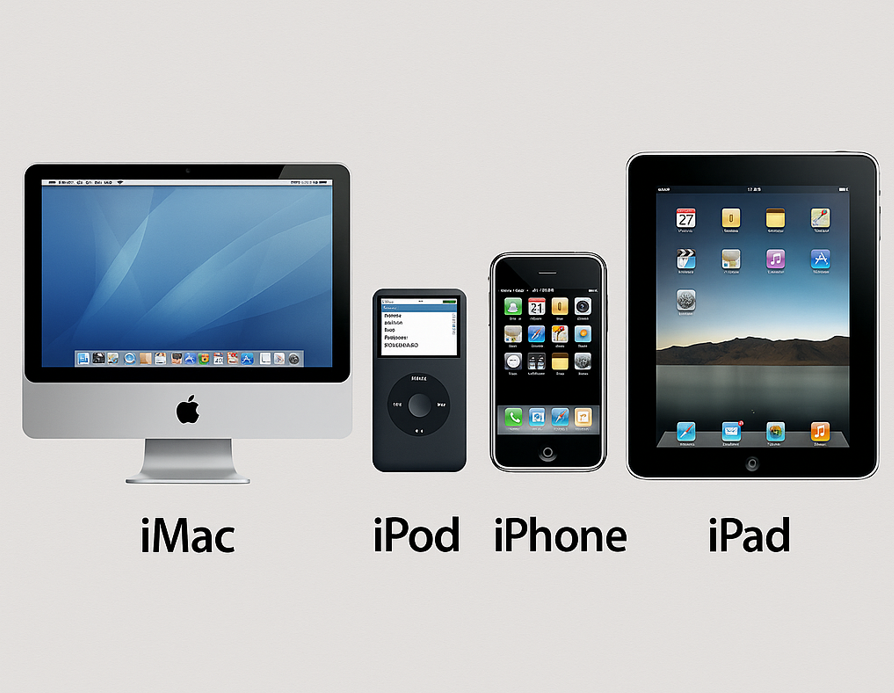
Under Steve Jobs’ leadership, Apple entered its golden age. Each new product redefined an entire industry:
- iMac (1998): The first all-in-one desktop with a focus on design and user experience. It made technology approachable and beautiful.
- iPod (2001): “1,000 songs in your pocket.” This iconic tagline captured the spirit of innovation and simplicity. The iPod revolutionized how people listened to music.
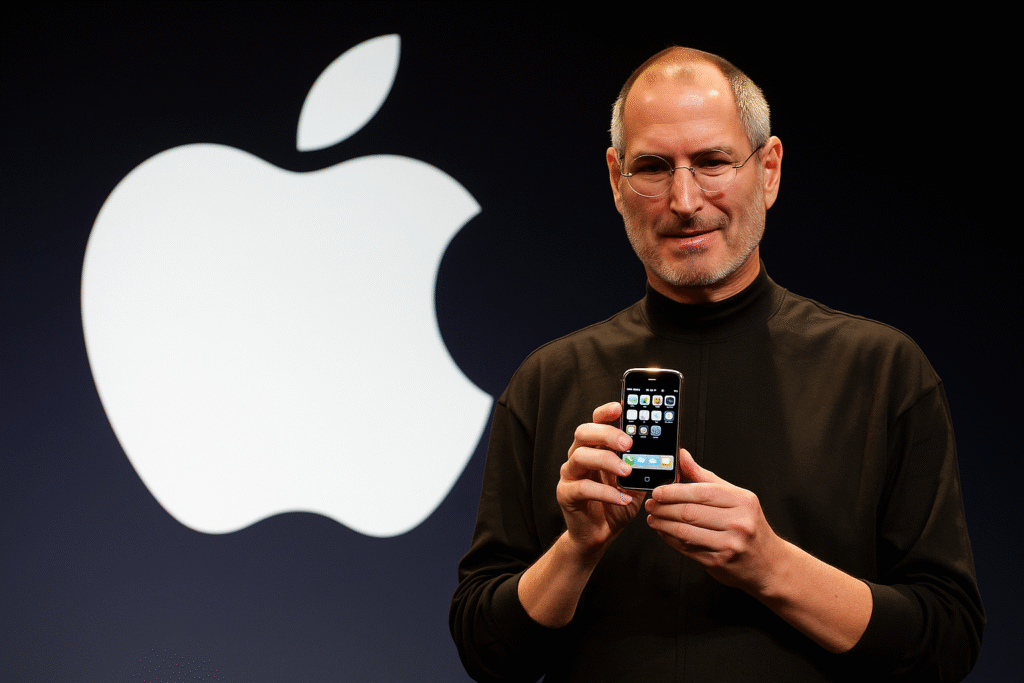
- iPhone (2007): Perhaps the greatest invention of Steve Jobs. The iPhone changed the world — it combined communication, entertainment, and computing into a single elegant device.
- iPad (2010): Another groundbreaking creation that bridged the gap between a phone and a computer, making portable technology accessible to all.
Each of these innovations reflected Jobs’ perfectionist mindset and his relentless pursuit of excellence. He believed that great products were not just functional — they had to evoke emotion.
Leadership Philosophy and Vision
Steve Jobs was not just a businessman; he was a storyteller and a dreamer. His approach to leadership was driven by passion, simplicity, and creativity. He once said:
“Innovation distinguishes between a leader and a follower.”
Jobs believed in creating experiences, not just products. He encouraged his teams to push boundaries and never settle for “good enough.” His presentations, famously known as “Steve Jobs Keynotes,” were theatrical events that mesmerized audiences worldwide.
The Legacy of Steve Jobs
On October 5, 2011, Steve Jobs passed away after a long battle with pancreatic cancer. The world mourned the loss of a true genius. But even after his passing, his vision continues to inspire entrepreneurs, designers, and dreamers around the world.
Apple, the company he built, remains one of the most influential and valuable brands on the planet. Every iPhone, Mac, and Apple Watch carries the essence of Jobs’ philosophy — simplicity, elegance, and innovation.
Life Lessons from Steve Jobs’ Journey
The life of Steve Jobs offers profound lessons for every entrepreneur:
- Follow your passion. Do what you love, and the rest will follow.
- Embrace failure. Jobs’ greatest success came after his biggest setback.
- Think differently. Innovation begins when you challenge the norm.
- Focus on excellence. Quality and design matter more than speed or shortcuts.
- Stay hungry, stay foolish. Never stop learning, exploring, or dreaming.
Conclusion: From Failure to Fortune
The story of Steve Jobs is not just about building Apple; it’s about building a vision that changed the world. From a small garage to a trillion-dollar empire, Jobs proved that passion, persistence, and creativity can conquer any obstacle.
Even today, his spirit lives on — in every Apple product, in every bold entrepreneur, and in every dreamer who dares to think differently.
Steve Jobs didn’t just create technology — he created a movement. A movement that reminds us all that greatness often begins in a garage.