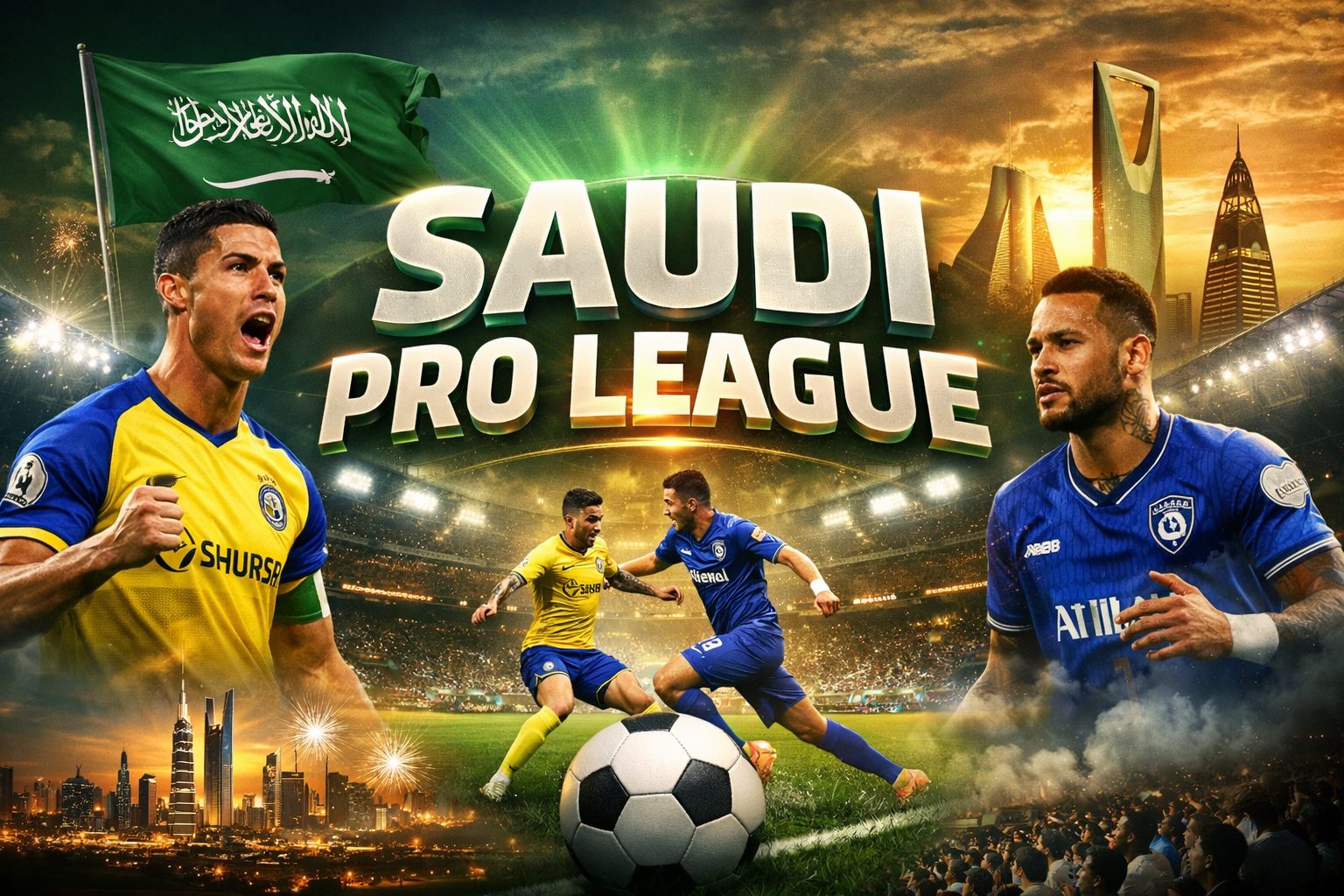
Saudi Pro League has rapidly transformed from a regional competition into one of the most talked-about football leagues in the world, sparking debates, excitement, and curiosity across global football communities. In just a few seasons, it has reshaped perceptions, attracted elite talent, and challenged long-standing football hierarchies that once seemed untouchable.
For decades, global football dominance revolved around Europe—England, Spain, Italy, and Germany set the benchmark. Today, however, the football world is witnessing a powerful shift, and Saudi Arabia is firmly at the center of it.
Table of Contents
Saudi Pro League: The Driving Force Behind the Football Revolution
The rise of the Saudi Pro League is not accidental. It is the result of strategic planning, massive investment, and a long-term national vision that sees football as both a sport and a global cultural asset.
Saudi Arabia’s Vision 2030 initiative aims to diversify the nation’s economy, and football plays a crucial role in that mission. By strengthening domestic competitions, investing in infrastructure, and improving fan experiences, the league has been positioned as a serious long-term project rather than a short-lived spectacle.
What makes this transformation remarkable is how quickly it has gained international relevance. Broadcast deals, social media engagement, and worldwide fan interest have skyrocketed, bringing unprecedented attention to Middle Eastern football.
Star Signings That Changed Global Attention
Nothing accelerated the awareness of the league more than the arrival of global superstars. When Cristiano Ronaldo joined Al Nassr, it sent a shockwave through world football.
Soon after, elite players from Europe’s biggest clubs followed:
- Al Hilal strengthened their squad with Champions League-level talent
- Al Ittihad brought experience and leadership into their lineup
- Al Ahli returned to the top tier with major ambition
These signings did more than sell shirts—they raised the league’s technical level, professionalism, and tactical understanding. Younger Saudi players now train alongside football legends, accelerating domestic talent development.
Infrastructure, Facilities, and Professional Standards
Beyond players, massive upgrades in infrastructure have supported the league’s growth. New stadiums, world-class training facilities, and sports science centers ensure that clubs operate at elite professional standards.
Clubs now follow advanced data analytics, fitness regimes, and injury-prevention systems similar to top European teams. Matchday experiences have also evolved, with better fan engagement, digital ticketing, and international broadcasting quality.
These improvements help the league attract not only players, but also elite coaches, analysts, and medical professionals—essential pillars of sustainable football success.
Financial Power vs Long-Term Sustainability
Critics often argue that financial power alone cannot guarantee footballing success. History shows that leagues built purely on spending struggle to maintain long-term credibility.
However, the Saudi model differs in a key way: spending is backed by structured governance and youth development goals. Investment flows into academies, grassroots programs, and coaching education, ensuring future domestic talent pipelines.
While wages remain attractive, clubs are now increasingly focused on performance metrics, discipline, and team balance rather than reputation alone.
Tactical Evolution and Competitive Balance
Early skepticism suggested matches would lack intensity or tactical discipline. Reality has proven otherwise.
Coaches with experience in European and South American football have brought tactical sophistication—high pressing systems, structured defensive blocks, and intelligent build-up play are now common.
Competition among top clubs is intense, and mid-table teams are no longer pushovers. Upsets, late winners, and tactical battles have made matches unpredictable and entertaining for global audiences.
Fan Culture and Global Viewership Growth
One of the most underrated aspects of the league’s rise is fan culture. Stadium attendance continues to improve, while social media engagement rivals established leagues.
Younger fans from Asia, Africa, and the Middle East increasingly follow Saudi clubs, especially due to the presence of globally recognizable players. International broadcasters now treat matches as premium content, further expanding reach.
Football is becoming a key part of Saudi Arabia’s global identity, not just a domestic sport.
Comparing the League With Europe’s Elite
Can the league rival the Premier League or La Liga today? Realistically, not yet.
European leagues benefit from decades of tradition, youth systems, and continental competitions. However, what makes Saudi football unique is its momentum. Growth that took Europe decades has occurred here in years.
If investment continues alongside grassroots development, tactical growth, and governance reforms, the gap could narrow faster than many expect.
Challenges That Still Remain
Despite progress, challenges exist:
- Maintaining competitive balance across all clubs
- Developing more local star players
- Managing fixture congestion and climate conditions
- Sustaining global interest beyond star names
How these issues are handled will define the league’s future trajectory.
The Road Ahead: Hype or Historic Shift?
The question is no longer whether Saudi football is serious—it clearly is. The real question is whether this growth becomes a permanent pillar of global football or settles as a powerful regional force.
Everything suggests long-term ambition. Infrastructure, youth development, governance reforms, and global outreach indicate a vision far beyond short-term headlines.
Final Verdict
The Saudi Pro League boom is not a marketing illusion—it represents a calculated, ambitious attempt to reshape global football dynamics. While Europe remains the benchmark, the league’s rapid rise, elite talent, and strategic planning suggest it could become one of the most influential football competitions of the next decade.
Whether it becomes the next big thing will depend on consistency, development, and footballing integrity—but one thing is certain: global football can no longer ignore it.