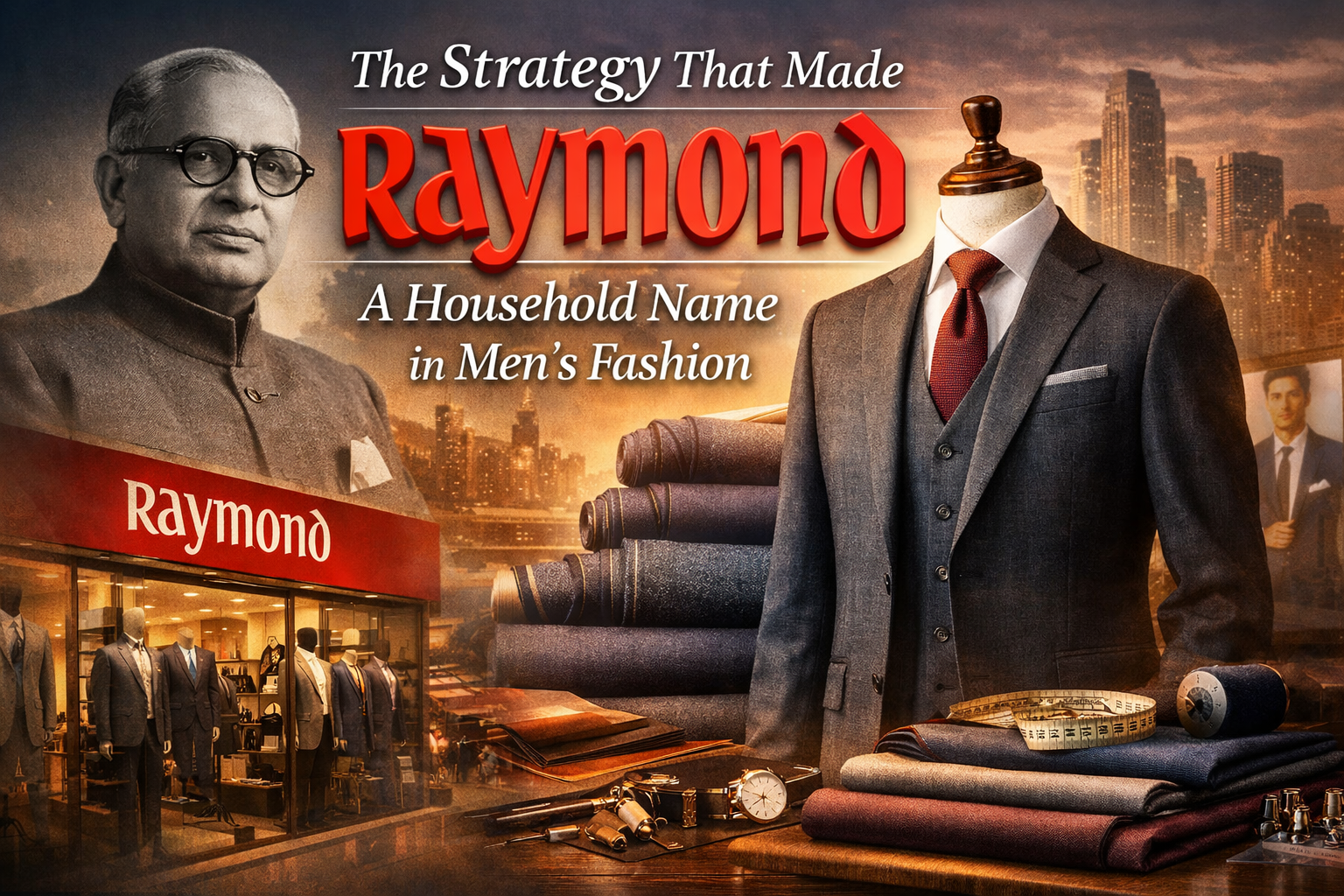
Raymond is more than just a brand name in India; it is a symbol of trust, quality, and timeless masculinity. From being a fabric-focused company to becoming a lifestyle powerhouse, the brand’s journey is a masterclass in long-term strategy, emotional branding, and disciplined execution. This article explores how Raymond built its dominance in men’s fashion, the thinking behind its success, and the historical roots that shaped its identity.
Table of Contents
The Early Foundation: History That Shaped the Brand
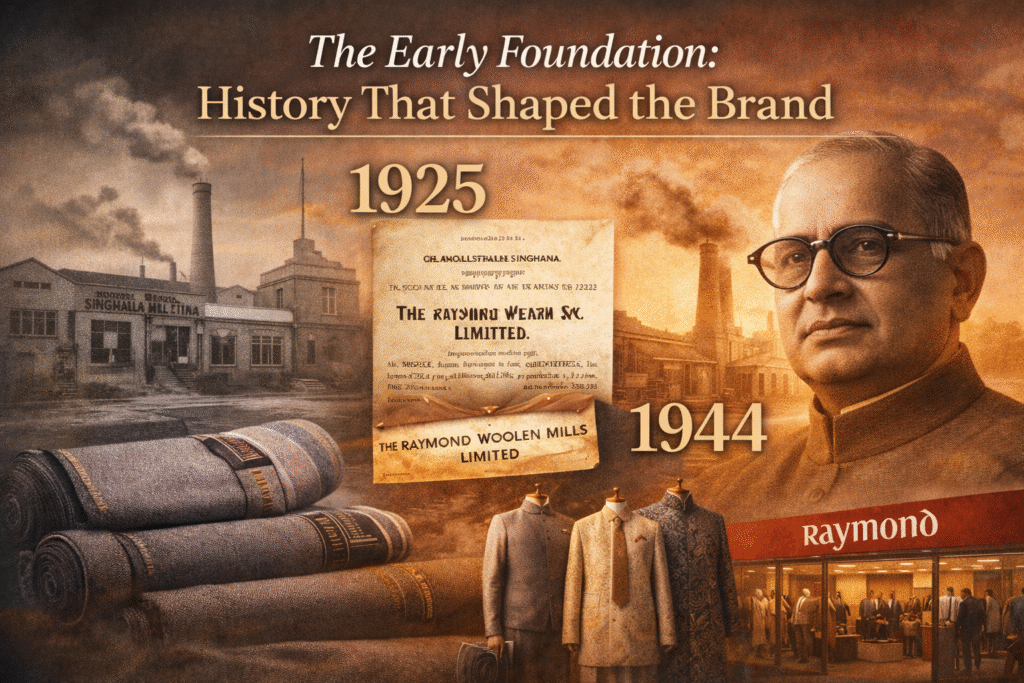
The story of Raymond Group begins in 1925, when it was founded as a small woolen mill near Thane, Maharashtra. In its early years, the company primarily supplied fabric to the Indian market, focusing on durability and consistency rather than mass appeal.
A major turning point came in 1944, when the company was acquired by Lala Kailashpat Singhania, a visionary industrialist who understood the long-term potential of textiles in a growing nation. Under his leadership, Raymond began investing heavily in modern machinery, technology, and skilled manpower. This focus on quality laid the groundwork for what would later become one of India’s most respected men’s fashion brands.
At a time when most Indian consumers relied on local tailors and unbranded cloth, Raymond positioned itself as a reliable name for premium suiting. This early emphasis on trust and excellence became the brand’s strongest competitive advantage.
Understanding the Core Insight: Men Buy Confidence, Not Just Clothes
One of the smartest strategic decisions Raymond made was understanding the emotional mindset of Indian men. Clothing was not just about fashion; it was about respect, social standing, and self-worth. Instead of chasing short-term trends, the brand focused on what men aspired to become.
This insight eventually led to a defining shift—from selling fabric to selling identity. The brand recognized that its real product was confidence. Every suit, shirt, or fabric length stood for ambition, responsibility, and maturity. This emotional clarity helped Raymond connect deeply with its audience across generations.
## Raymond and the Power of a Single Brand Philosophy
No discussion about the brand’s rise is complete without mentioning its iconic positioning: “The Complete Man.” This philosophy was not limited to advertising slogans; it was embedded into product design, communication, and retail experience.
The strategy worked because it was aspirational yet relatable. The brand never portrayed unrealistic glamour. Instead, it showed men as responsible professionals, family-oriented individuals, and confident decision-makers. This consistent messaging helped Raymond build an emotional bond that competitors found difficult to replicate.
By staying focused on values rather than fleeting fashion cycles, the brand created long-term recall and loyalty.
Vertical Integration: Controlling Quality End-to-End
Another key strategy behind Raymond’s success was vertical integration. The company invested across the entire value chain—from raw material sourcing and manufacturing to branding and retail. This allowed complete control over quality, cost, and consistency.
Owning state-of-the-art textile mills helped the brand maintain superior fabric standards. In men’s fashion, where fit and finish matter deeply, this control became a silent differentiator. While many competitors depended on third-party suppliers, Raymond ensured uniform excellence across markets.
This approach also made it easier to scale without diluting brand perception.
From Fabric to Fashion: Strategic Brand Expansion
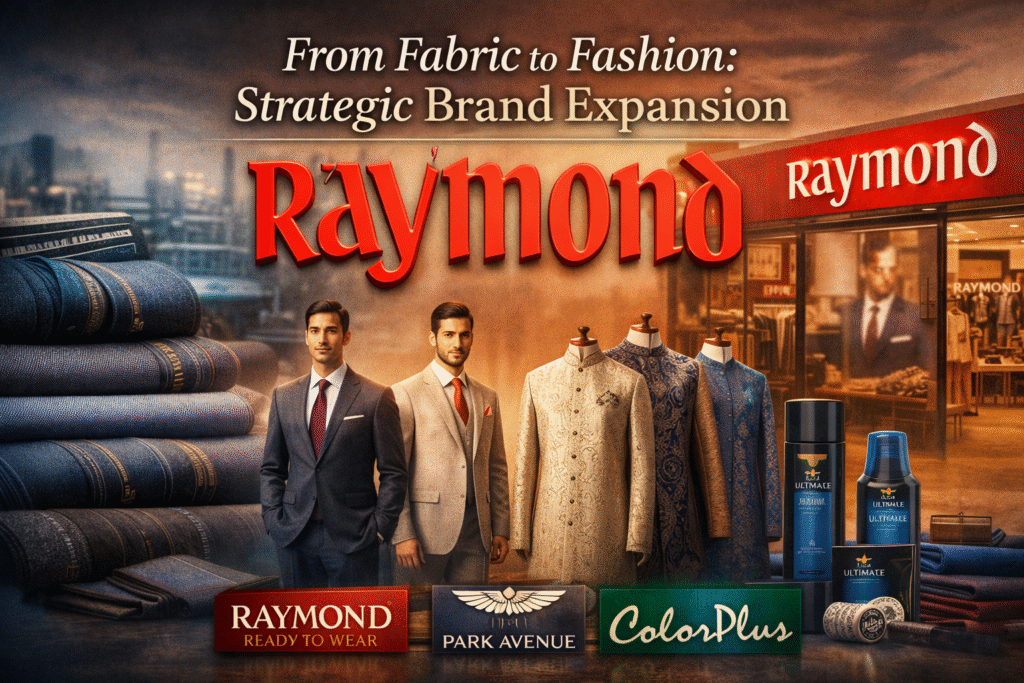
For decades, the company was known mainly as a fabric brand. However, leadership realized that long-term growth required moving closer to the consumer. This led to a strategic expansion into ready-to-wear, ethnic wear, and lifestyle segments.
Instead of abandoning its core strength, the brand extended it. Ready-made garments were designed with the same philosophy that defined its fabrics—classic, elegant, and dependable. This ensured that new categories strengthened the parent brand rather than confusing customers.
The retail strategy supported this shift by opening exclusive brand stores that offered a controlled, premium experience. Customers no longer bought just cloth; they bought assurance.
Retail Reach: Becoming a Household Presence
Accessibility played a crucial role in making Raymond a household name. The company expanded aggressively across metros, tier-2, and tier-3 cities. This nationwide presence meant that aspirational consumers could access premium menswear without feeling intimidated.
Exclusive showrooms, multi-brand outlets, and franchise models helped balance scale with consistency. Even in smaller towns, the brand experience remained familiar and trustworthy. Over time, this physical presence reinforced recall and credibility.
The result was simple: when Indian men thought of formal wear or suits, one name came naturally to mind.
Marketing Consistency Over Decades
Unlike many brands that frequently reinvent themselves, Raymond believed in continuity. Its advertising evolved with time, but the core message remained intact. Campaigns focused on life moments—career milestones, relationships, responsibility, and growth.
This long-term consistency created cumulative brand equity. Each campaign built on the last, strengthening the same emotional narrative. By not chasing shock value or short-term virality, the brand protected its premium image.
In an industry driven by trends, this patience became a powerful strategic weapon.
Adapting Without Losing Identity
While tradition defined the brand, stagnation was never an option. Over the years, Raymond modernized its designs, adopted new retail formats, and invested in digital platforms. Yet, it never compromised on its core values.
Even while targeting younger audiences, the brand maintained its tone of maturity and purpose. This careful balance between evolution and identity helped it stay relevant without alienating loyal customers.
Few legacy brands manage this transition successfully, making Raymond’s approach particularly noteworthy.
Leadership and Culture as Strategic Assets
Behind the scenes, leadership continuity and organizational culture played a vital role. Decision-making was long-term, disciplined, and brand-first. Investments were evaluated not only on profitability but also on their impact on brand trust.
This culture ensured that short-term gains never came at the cost of reputation. Over decades, this mindset created a stable foundation that allowed the brand to weather economic cycles, competition, and changing consumer behavior.
Conclusion: Strategy Built on Trust and Time
The success story of Raymond is not about aggressive disruption or rapid reinvention. It is about patience, clarity, and respect for the consumer. By focusing on quality, emotional connection, vertical control, and consistent branding, the company transformed itself into a household name in men’s fashion.
In a market crowded with fast-fashion players and trend-driven labels, Raymond stands as proof that legacy brands can thrive when strategy is rooted in trust, values, and long-term vision.