
Pakistan Cricket Team — a name that embodies passion, unpredictability, and raw talent. Since its debut in 1952, the Pakistan Cricket Team has been an integral part of world cricket, earning global respect through its fearless performances and legendary players. Over the decades, this team has transformed from a group of newcomers into one of the most powerful and admired sides in international cricket.
The story of the Pakistan Cricket Team is not just about victories and trophies; it’s about resilience, evolution, and an unbreakable bond between the nation and the game.
Table of Contents
The Early Days: Formation and First Steps (1952–1970s)
The Pakistan Cricket Team played its first official Test match against India in 1952, just five years after the country’s independence. It was a remarkable achievement for a newly formed nation to assemble a competitive team so quickly. The early heroes — Abdul Hafeez Kardar, Fazal Mahmood, and Hanif Mohammad — laid the foundation for Pakistan’s cricketing identity. Hanif Mohammad’s legendary innings of 337 against the West Indies in 1958 remains one of the greatest Test knocks of all time.
During these formative years, Pakistan was establishing itself as a side full of potential. Despite limited resources and infrastructure, the Pakistan Cricket Team displayed grit, determination, and a natural flair that made the world take notice.
The Rise of a Cricketing Power (1970s–1980s)
The 1970s marked the emergence of a stronger and more confident Pakistan Cricket Team. Under the leadership of Imran Khan, Javed Miandad, and Zaheer Abbas, Pakistan began to compete fiercely against established cricketing nations. The team’s aggressive fast bowling and stylish batting made them a formidable opponent.
The 1980s saw Pakistan becoming one of the most balanced sides in the world. Imran Khan’s charisma as captain and his ability to inspire his teammates brought out the best in them. The Pakistan Cricket Team started to win series abroad, including memorable victories over India and England. This period also introduced future legends like Wasim Akram and Waqar Younis — the duo that would redefine fast bowling forever.
The 1992 World Cup Glory: A Nation’s Dream Realized
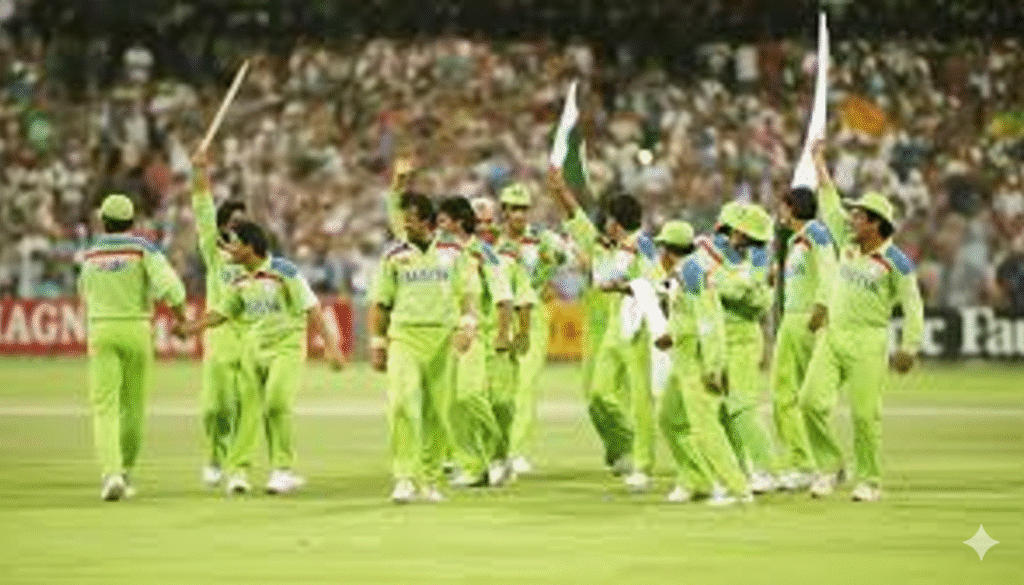
No story about the Pakistan Cricket Team is complete without mentioning the 1992 ICC Cricket World Cup. Under the inspirational leadership of Imran Khan, Pakistan defied all odds to lift the trophy for the first time in history. From a struggling start to a fairytale ending, it was a campaign that reflected Pakistan’s spirit — unpredictable, thrilling, and unforgettable.
Imran Khan’s “Cornered Tigers” became a symbol of national pride. The likes of Wasim Akram, Inzamam-ul-Haq, and Javed Miandad played pivotal roles in the triumph. This victory not only elevated Pakistan’s standing in world cricket but also ignited a generation’s passion for the game. The Pakistan Cricket Team had announced itself as a true global champion.
Consistency and Challenges (1993–2006)
Following the World Cup win, the Pakistan Cricket Team continued to produce exceptional talent. Wasim Akram, Waqar Younis, Saeed Anwar, and Inzamam-ul-Haq became household names. Pakistan dominated in both Tests and ODIs, earning a reputation for producing world-class bowlers and aggressive batsmen.
However, the late 1990s and early 2000s were not without challenges. Leadership changes, match-fixing controversies, and internal politics often disrupted the team’s momentum. Despite these hurdles, the Pakistan Cricket Team continued to shine on the field. Players like Shoaib Akhtar, the world’s fastest bowler, and Younis Khan carried the legacy forward, ensuring Pakistan remained competitive across formats.
The T20 Revolution and the 2009 World Cup Triumph
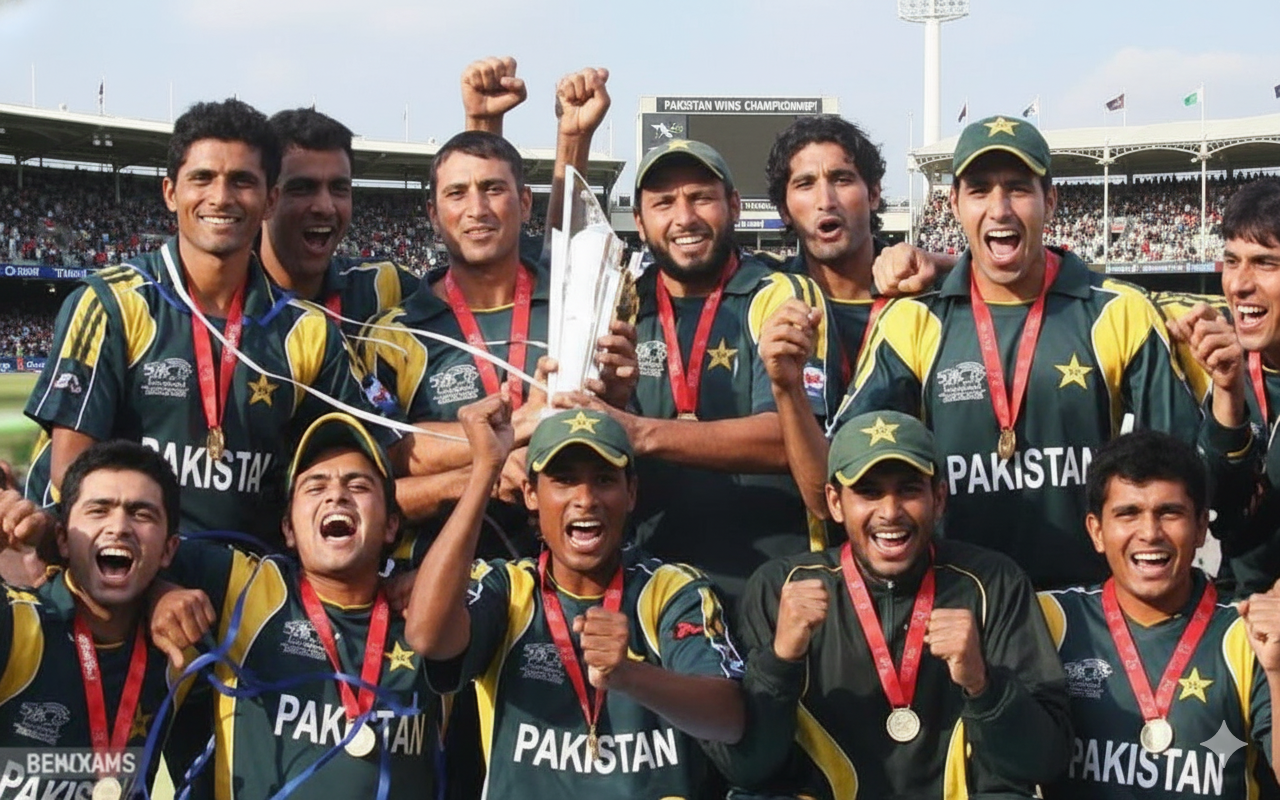
In 2009, the Pakistan Cricket Team captured its second ICC title by winning the T20 World Cup in England under Younis Khan’s captaincy. This victory came at a time when Pakistan was struggling with home series restrictions due to security concerns. The win was emotional and inspiring — a reminder of the nation’s cricketing resilience.
Shahid Afridi’s match-winning performances, Umar Gul’s yorkers, and the team’s collective spirit brought joy to millions. The triumph proved that the Pakistan Cricket Team could adapt to modern formats while maintaining its traditional aggression and flair.
A New Era of Professionalism (2010–2017)
The 2010s saw the Pakistan Cricket Team evolve into a more structured and disciplined unit. Misbah-ul-Haq’s calm leadership stabilized the side during tough times. Under his captaincy, Pakistan achieved the No. 1 ranking in Test cricket in 2016 — a remarkable feat considering they played most of their home matches abroad.
In 2017, Pakistan stunned the world again by winning the ICC Champions Trophy, defeating arch-rivals India in the final by a massive margin. This win, under Sarfaraz Ahmed’s captaincy, was seen as redemption — proving that Pakistan still had the heart of a champion. The performance of Fakhar Zaman, Hasan Ali, and Mohammad Amir reignited Pakistan’s glory.
The Modern Era: Babar Azam and the Future (2018–2025)
The modern-day Pakistan Cricket Team is led by Babar Azam, one of the finest batsmen in the world. His leadership has brought a sense of consistency and professionalism to the side. With players like Shaheen Afridi, Mohammad Rizwan, Shadab Khan, and Naseem Shah, the team combines youthful energy with experience.
Between 2021 and 2025, Pakistan has shown steady progress in all formats. They reached the T20 World Cup 2022 final, competed strongly in the 2023 ODI World Cup, and continued to produce fast bowlers who strike fear into opponents. The Pakistan Cricket Team today stands as a symbol of balance — a mix of aggression, talent, and maturity.
The Legacy and Global Impact
The Pakistan Cricket Team has always been more than just a cricket side. It represents hope, unity, and national pride. The team’s unpredictable nature has made it one of the most exciting to watch — you never know when Pakistan might produce magic. From Imran Khan’s leadership to Babar Azam’s elegance, Pakistan’s cricketing legacy is filled with unforgettable moments and legendary performances.
Their ability to bounce back from setbacks makes them unique. Whether it’s winning against top teams abroad or producing the next generation of fast bowlers, the Pakistan Cricket Team continues to inspire millions around the globe.
Conclusion
The journey of the Pakistan Cricket Team from 1952 to 2025 is a story of passion, struggle, and triumph. From humble beginnings to global dominance, Pakistan has carved its name in cricketing history. Despite ups and downs, the team has never lost its fighting spirit. With a bright future ahead and a legacy built on talent and heart, the Pakistan Cricket Team remains one of the most admired and unpredictable forces in world cricket.