
Lenskart is a name that has completely transformed how eyewear is bought, sold, and experienced in India. From a simple online idea to a nationwide omnichannel giant, the brand’s journey reflects the rise of modern Indian retail. In an industry once dominated by small local opticians and inconsistent pricing, the company brought transparency, technology, and trust—creating a new benchmark for consumer-focused businesses.
This article explores the complete business and brand story of Lenskart, starting from its background and early struggles to its growth strategy, retail innovation, and long-term vision.
Table of Contents
Company Background and Foundation
The story begins in 2008, when the foundation of the business was laid under the name Valyoo Technologies. The original idea was not eyewear but an online platform offering vision-related services such as contact lenses. The founders identified a critical gap in India’s optical industry—lack of affordability, limited access, and poor standardization.
In 2010, the brand name Lenskart was officially launched, focusing on eyewear as its core offering. At the time, buying spectacles in India involved high prices, limited frame options, and almost no price transparency. The founders believed eyewear should be affordable, fashionable, and accessible to everyone.
This clear understanding of consumer pain points shaped the company’s early vision and laid the foundation for what would become one of India’s most successful retail brands.
Lenskart and the Early Growth Phase
In its initial years, the company operated as a pure online retailer. Customers could browse frames, upload prescriptions, and order glasses from the comfort of their homes. This model drastically reduced costs by eliminating middlemen and passing the savings directly to consumers.
However, eyewear is a category where trust matters deeply. Many customers were hesitant to buy spectacles without physically trying them. Recognizing this challenge early, the brand introduced innovative solutions such as home try-on and easy return policies.
These customer-friendly initiatives helped build credibility and slowly expanded the brand’s reach across urban India.
Lenskart and the Shift to Omnichannel Retail
One of the most important turning points in the journey was the decision to enter offline retail. Instead of seeing physical stores as a threat to online growth, the company viewed them as an opportunity to strengthen trust and scale faster.
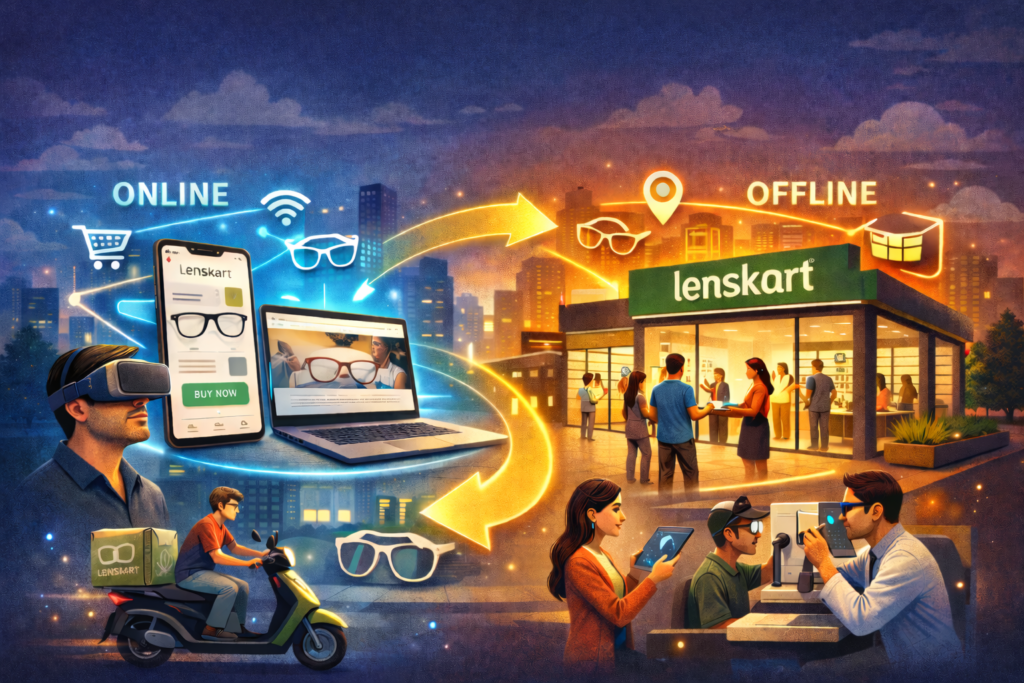
Physical stores allowed customers to:
- Get professional eye tests
- Try frames in person
- Receive instant guidance from trained staff
The combination of online convenience and offline assurance created a powerful omnichannel ecosystem. This strategy proved especially successful in Tier-2 and Tier-3 cities, where customers valued in-person interaction.
Today, the brand operates thousands of stores while maintaining a strong digital presence, making it one of the most effective omnichannel retailers in India.
Lenskart as a Technology-Led Retail Brand
Technology has always been central to the brand’s DNA. From virtual try-on tools to AI-driven recommendations, innovation played a crucial role in improving customer experience.
Advanced data analytics helped the company:
- Predict demand accurately
- Manage inventory efficiently
- Reduce delivery times
- Improve personalization
Instead of using technology as a support function, the business integrated it into every stage of operations. This tech-first mindset enabled rapid expansion without compromising service quality.
Lenskart and the Private Label Advantage
Another major factor behind the brand’s success is its focus on private labels. Rather than relying solely on third-party eyewear brands, the company developed its own in-house collections.
This approach delivered multiple benefits:
- Better control over quality
- Higher profit margins
- Faster product innovation
- Competitive pricing
Private labels also helped the brand build a unique identity. Customers no longer viewed it as just a retailer but as a fashion-forward eyewear brand offering value and variety.
Brand Building and Marketing Strategy
Strong branding has played a vital role in the company’s rise. Marketing campaigns focused on everyday needs rather than luxury positioning. The message was simple—good vision should be accessible to all.
Television ads, digital marketing, influencer collaborations, and celebrity endorsements helped create mass appeal. However, consistency remained the real strength. Whether online or in-store, customers experienced the same pricing transparency and service standards.
This consistent brand promise built long-term trust and turned one-time buyers into loyal customers.
Lenskart and Supply Chain Excellence
Behind the scenes, operational efficiency powered the brand’s scalability. The company invested heavily in manufacturing units, automated lens labs, and logistics infrastructure.
Vertical integration allowed:
- Faster order fulfillment
- Reduced dependency on external suppliers
- Better quality control
By owning critical parts of the supply chain, the brand improved margins while maintaining affordability—a rare achievement in retail.
Financial Growth and Market Position
Over the years, the company witnessed strong revenue growth driven by store expansion, repeat customers, and international operations. Its ability to move from aggressive growth to improved profitability highlighted the maturity of its business model.
The brand’s strong financial performance attracted global investors and reinforced confidence in its long-term vision. Today, it stands as one of India’s most valuable consumer retail companies.
Lenskart and International Expansion
After establishing dominance in India, the company expanded into international markets across Asia and the Middle East. These markets shared similar consumer challenges, making the brand’s value proposition highly relevant.
Global expansion required localization in pricing, designs, and retail strategy, but the core philosophy remained unchanged—affordable, stylish, and reliable eyewear.
This international presence positioned the brand as a global contender emerging from India.
Challenges Faced by Lenskart
Rapid expansion brought its own challenges. Maintaining service quality across thousands of stores, managing costs, and staying ahead of competition required constant innovation.
The eyewear market became increasingly competitive, with both domestic and international players entering the space. However, the brand’s focus on customer trust, operational discipline, and technology helped it navigate these pressures successfully.
Lenskart as a Blueprint for Modern Indian Retail
The story offers valuable lessons for Indian entrepreneurs. It proves that traditional industries can be transformed with the right mix of technology, customer focus, and execution.
The brand showed that:
- Omnichannel is the future of retail
- Technology enables scale, not just efficiency
- Trust is the most powerful differentiator
Its journey redefined what a modern Indian retail brand can achieve.
Conclusion: The Legacy and Future of Lenskart
The rise of Lenskart represents more than just business success—it reflects a shift in how Indian consumers think about quality, price, and experience. By solving real problems and staying relentlessly customer-centric, the brand built an ecosystem rather than just a retail chain.
As it continues to innovate and expand globally, the company stands as a symbol of India’s new-age entrepreneurship. Its journey proves that with clarity of vision and disciplined execution, Indian brands can not only dominate domestic markets but compete confidently on the world stage.