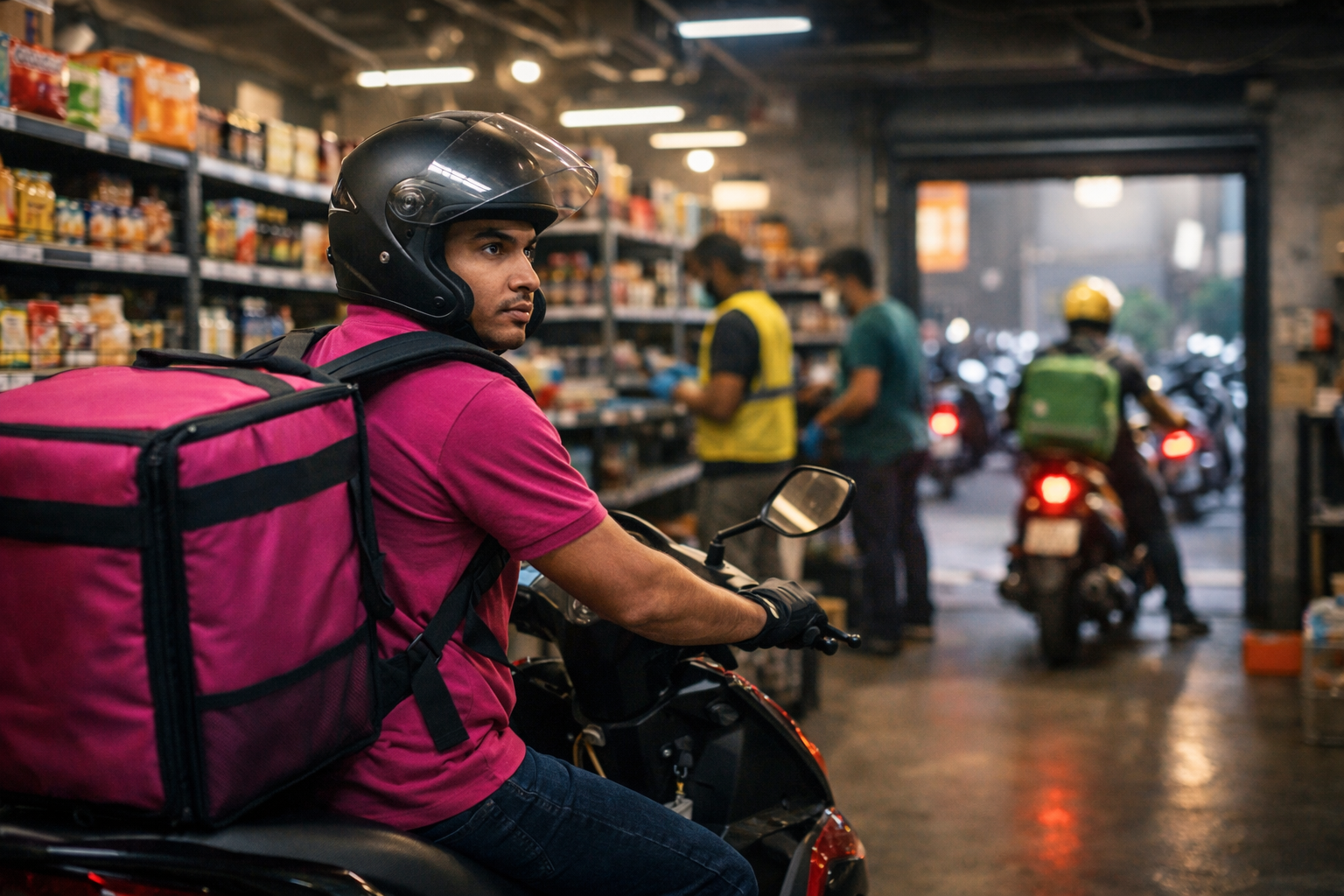
10-Minute Delivery has rapidly become one of the most disruptive ideas in modern retail, redefining how urban consumers think about convenience. What once felt impossible—getting groceries, snacks, or essentials delivered almost instantly—is now an everyday expectation in many cities. But behind this promise of speed lies a business model that is expensive to operate, difficult to scale, and brutally unforgiving to inefficiency.
This article goes beyond the hype to explore how the 10-minute delivery business actually works, where the money is spent, how revenue is generated, and why only a few players may survive in the long run.
Table of Contents
10-Minute Delivery: What Makes This Model Different?
Traditional e-commerce is built on patience. Customers wait a day or two, and companies optimize for bulk shipping, centralized warehouses, and low delivery costs. The 10-minute delivery model flips this logic completely.
Here, speed is the product.
To make ultra-fast delivery possible, companies depend on:
- Micro-warehouses (dark stores) placed close to customers
- A narrow but fast-moving product selection
- Real-time inventory tracking
- Delivery partners positioned for immediate dispatch
The value proposition is clear: remove waiting time from everyday shopping. The operational reality, however, is far more complex.
The Cost Side: Why Speed Is So Expensive
Every minute saved adds pressure to margins. The faster the delivery, the less room there is to optimize costs.
1. Dark Stores: The Hidden Infrastructure
Dark stores are small warehouses located inside residential neighborhoods. They are designed purely for speed, not foot traffic.
Key cost challenges include:
- Premium urban rent
- Continuous operational expenses
- Staff for picking, packing, and supervision
Unlike physical retail stores, dark stores generate no walk-in sales. Their survival depends entirely on high daily order volume.
2. Inventory Management at Micro Scale
Maintaining inventory across dozens or hundreds of dark stores is one of the toughest challenges.
Companies must:
- Predict demand accurately
- Avoid overstocking perishable goods
- Prevent stock-outs of fast-moving items
Even small forecasting errors can lead to wastage or lost orders, both of which directly hurt margins.
3. Delivery Economics: The Most Fragile Layer
Delivery partners are central to the customer experience—and one of the biggest cost centers.
Expenses typically include:
- Per-order payouts
- Peak-hour incentives
- Safety and insurance provisions
Because orders must be delivered immediately, companies cannot easily bundle multiple deliveries, unlike food or parcel delivery services.
4. Technology and Speed Optimization
What looks like a simple app experience is powered by complex systems that manage:
- Real-time order routing
- Inventory synchronization
- Delivery partner allocation
- Customer notifications
Continuous investment in technology is non-negotiable, making fixed costs even heavier.
Revenue Streams: Where the Money Comes From
Despite thin margins, the 10-minute delivery model is not without monetization opportunities.
1. Product Margins
Revenue primarily comes from selling goods at a markup over procurement cost. However, grocery margins are historically low, leaving little room for error.
2. Delivery Fees and Convenience Charges
Some platforms charge small delivery or handling fees, especially during peak demand. While this improves unit economics, pricing sensitivity remains high among users.
3. Advertising and Brand Visibility
As platforms gain scale, brands pay for:
- Sponsored listings
- Priority placement
- In-app promotions
This has become one of the most promising revenue streams, especially for large platforms.
10-Minute Delivery and the Profitability Question
The biggest criticism of this model is simple: can it ever make money?
In most cases, platforms operate at a loss during their growth phase. The strategy relies on:
- Increasing order frequency per user
- Achieving high order density per dark store
- Gradually reducing per-order fulfillment cost
Profitability improves only when a dark store processes a large number of orders daily. Without density, scaling actually amplifies losses.
Real-World Execution: Why Some Players Perform Better
Not all companies execute this model equally well. Platforms like Zepto, Blinkit, and Swiggy Instamart show that disciplined expansion and operational control matter more than aggressive discounting.
Success depends less on being first and more on:
- Location planning
- Supply chain efficiency
- Cost discipline
Risks That Can Derail the Model
1. Unit Economics Breakdown
If the cost to fulfill an order consistently exceeds the revenue it generates, growth becomes a liability rather than an advantage.
2. Competitive Discount Wars
Heavy competition often leads to excessive discounts, which temporarily boost demand but damage long-term sustainability.
3. Regulatory and Labor Pressures
Urban zoning laws, labor regulations, and safety requirements can significantly raise operating costs.
4. Changing Consumer Behavior
While customers enjoy speed, many are unwilling to pay a premium for it. A shift toward planned shopping or price sensitivity can quickly reduce demand.
Long-Term Outlook: Sustainable or Selective?
The future of 10-minute delivery is likely focused rather than universal.
This model works best in:
- High-density urban neighborhoods
- Cities with strong purchasing power
- Categories with frequent repeat demand
It is far less viable in low-density areas where order volumes cannot justify infrastructure costs.
Final Verdict
10-Minute Delivery is not a shortcut to easy growth—it is a test of operational excellence. The model rewards precision, discipline, and patience, while punishing reckless expansion and poor cost control.
For customers, it feels magical. For businesses, it is one of the hardest retail models to execute successfully. In the long run, only companies that treat speed as a system—not a slogan—will turn this ambitious idea into a sustainable business.