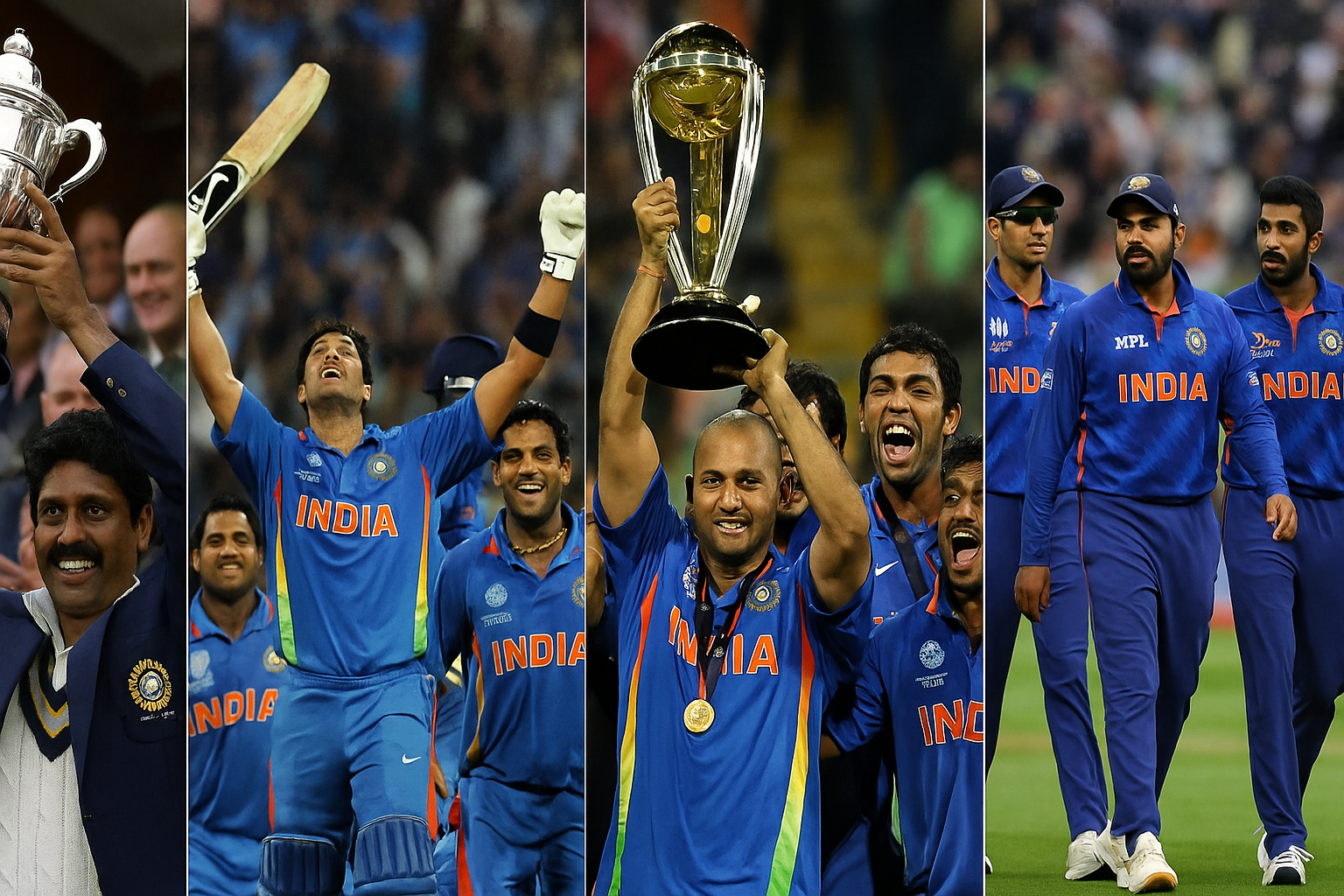
The India National Cricket Team has one of the most inspiring stories in the history of world cricket. From playing their first Test match in 1932 at Lord’s to becoming a cricketing powerhouse in 2025, India’s journey is filled with determination, passion, and remarkable achievements. Over the decades, the India National Cricket Team has produced some of the greatest legends, witnessed historical wins, and transformed from underdogs to global champions.
Table of Contents
The Early Days of the India National Cricket Team (1932–1947)
The India National Cricket Team made its debut in international cricket in 1932 against England at Lord’s. Though India lost that Test, the match marked the birth of a new era for Indian sports. Led by CK Nayudu, the team displayed courage against a far more experienced English side. In those early years, India played only a handful of Test matches, primarily against England and Australia. Despite limited facilities and experience, the players showcased immense spirit and laid the foundation for future generations.
During the pre-independence period, cricket in India was still developing. The sport was mainly popular among the elite and was centered around a few princely states. Yet, the passion of the players for representing their country was unmatched.
Post-Independence Growth and the First Test Win (1947–1970)
After independence, the India National Cricket Team began its steady rise. In 1952, India achieved its first-ever Test victory against England at Madras (now Chennai), a landmark moment that ignited the nation’s belief in its cricketing potential. The 1950s and 1960s saw the emergence of great players like Polly Umrigar, Vijay Hazare, and Vinoo Mankad.
However, the journey was far from easy. The team struggled with consistency and lacked professional infrastructure. Despite the odds, India’s performances gradually improved. The 1960s also introduced spin legends like Bishan Singh Bedi, Erapalli Prasanna, and Bhagwat Chandrasekhar, who together formed the famous “Indian Spin Quartet.” These bowlers became the backbone of the India National Cricket Team and earned victories even in challenging overseas conditions.
The Golden Turning Point – 1970s to 1980s
The 1970s marked a revolutionary phase for the India National Cricket Team. Under Ajit Wadekar’s captaincy, India won historic Test series in the West Indies and England in 1971 — a defining achievement that changed how the world viewed Indian cricket. This era also saw the rise of cricketing giants like Sunil Gavaskar and Kapil Dev.
The crowning glory came in 1983, when Kapil Dev led India to its first-ever Cricket World Cup victory at Lord’s. That moment wasn’t just a sporting win; it was an emotional triumph that united a billion people. The 1983 World Cup win put the India National Cricket Team on the global map, proving that India could compete — and win — against the best.
In 1985, India also clinched the Benson & Hedges World Championship of Cricket in Australia, further solidifying their dominance. This was the decade when Indian cricket evolved from passion to pride.
The 1990s: Rise of New Legends
The 1990s brought a new wave of talent that shaped the future of the India National Cricket Team. Sachin Tendulkar, Rahul Dravid, Sourav Ganguly, and Anil Kumble became household names. Under Mohammad Azharuddin and later Sourav Ganguly’s leadership, India began to find its fearless identity.
Tendulkar’s brilliance with the bat made him a global icon, while Dravid’s technique, Ganguly’s aggression, and Kumble’s consistency made India a complete side. The team started winning not just at home but also abroad, and fans’ expectations soared. The India National Cricket Team became a symbol of resilience and excellence.
2000–2011: The Golden Era of Indian Cricket
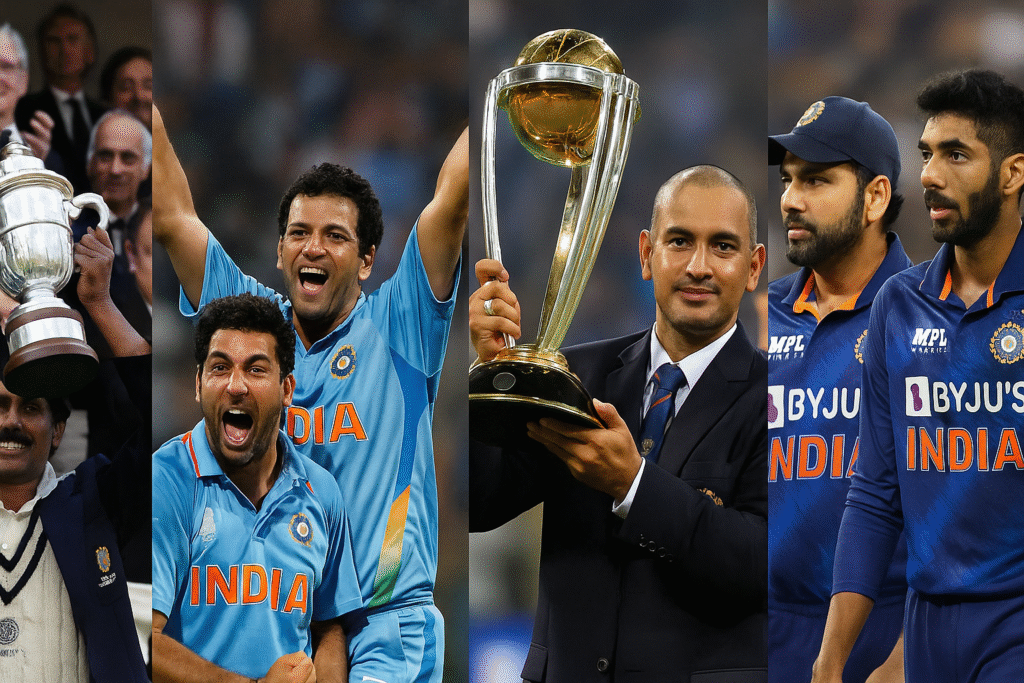
The new millennium ushered in one of the most successful eras for the India National Cricket Team. Under the leadership of Sourav Ganguly and later Mahendra Singh Dhoni, India emerged as a global cricketing powerhouse. The infusion of young talent — like Virender Sehwag, Yuvraj Singh, Harbhajan Singh, and Zaheer Khan — brought balance and aggression to the team.
In 2007, Dhoni led India to victory in the inaugural ICC T20 World Cup, marking the start of a new cricketing era. Four years later, India achieved the ultimate dream: winning the ICC Cricket World Cup 2011 on home soil, defeating Sri Lanka in the final at Mumbai’s Wankhede Stadium. This win was deeply emotional, symbolizing decades of effort, unity, and national pride. The India National Cricket Team had completed a full circle — from underdogs to world champions.
2013–2020: Consistency and Global Dominance
Under Dhoni and later Virat Kohli, the India National Cricket Team maintained its dominance across all formats. They became the No. 1 Test side in the world and consistently performed well in ODIs and T20s. Kohli’s era was marked by intense fitness culture, aggressive gameplay, and a fearless approach.
India also won the 2013 ICC Champions Trophy under Dhoni, making him the only captain in history to win all three ICC trophies — T20 World Cup (2007), 50-over World Cup (2011), and Champions Trophy (2013). The India National Cricket Team was now respected as one of the strongest units in world cricket.
2020–2025: The Modern Generation and New Aspirations
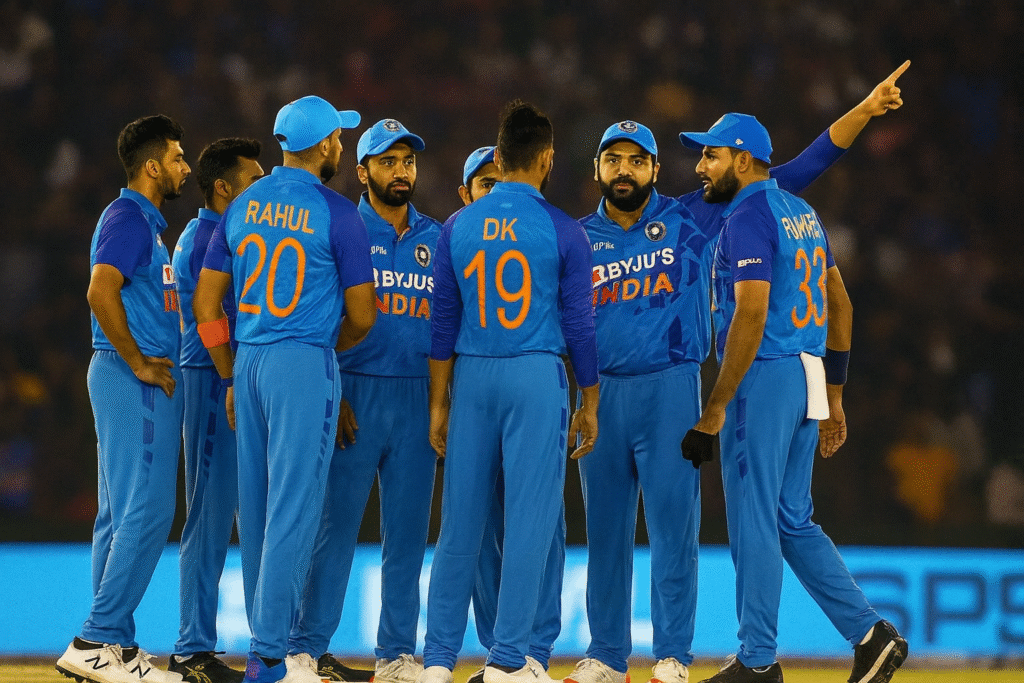
From 2020 to 2025, the India National Cricket Team witnessed a generational shift. With Rohit Sharma taking over as captain and the rise of stars like Shubman Gill, Jasprit Bumrah, Rishabh Pant, and Hardik Pandya, the team blended experience with youth.
The introduction of the World Test Championship added new dimensions to the game. India reached the finals in both 2021 and 2023, proving their consistency in the longest format. Though they fell short in the finals, their performances reaffirmed India’s strength in Test cricket.
Meanwhile, in white-ball cricket, India continued to dominate bilateral series and global tournaments. The IPL (Indian Premier League) also played a huge role in shaping modern Indian cricketers, improving their adaptability and mental toughness. By 2025, the India National Cricket Team remains one of the most feared and respected teams globally, carrying the legacy of nearly a century.
The Legacy of the India National Cricket Team
The India National Cricket Team stands as a beacon of national pride and sporting excellence. From CK Nayudu’s first steps in 1932 to Rohit Sharma’s leadership in 2025, India’s cricket journey has been nothing short of legendary. The team has not only brought home trophies but also inspired generations to dream big.
With every win and defeat, the team has grown stronger — reflecting the spirit of a nation that never gives up. The next chapter of Indian cricket promises even greater success, innovation, and inspiration.
Conclusion
The story of the India National Cricket Team is not just about cricket — it’s about resilience, unity, and national identity. From colonial beginnings to world dominance, the team’s 93-year journey is a testament to India’s evolving spirit and sporting brilliance. As the team looks ahead to 2025 and beyond, one thing remains certain: the India National Cricket Team will continue to inspire billions, both on and off the field.