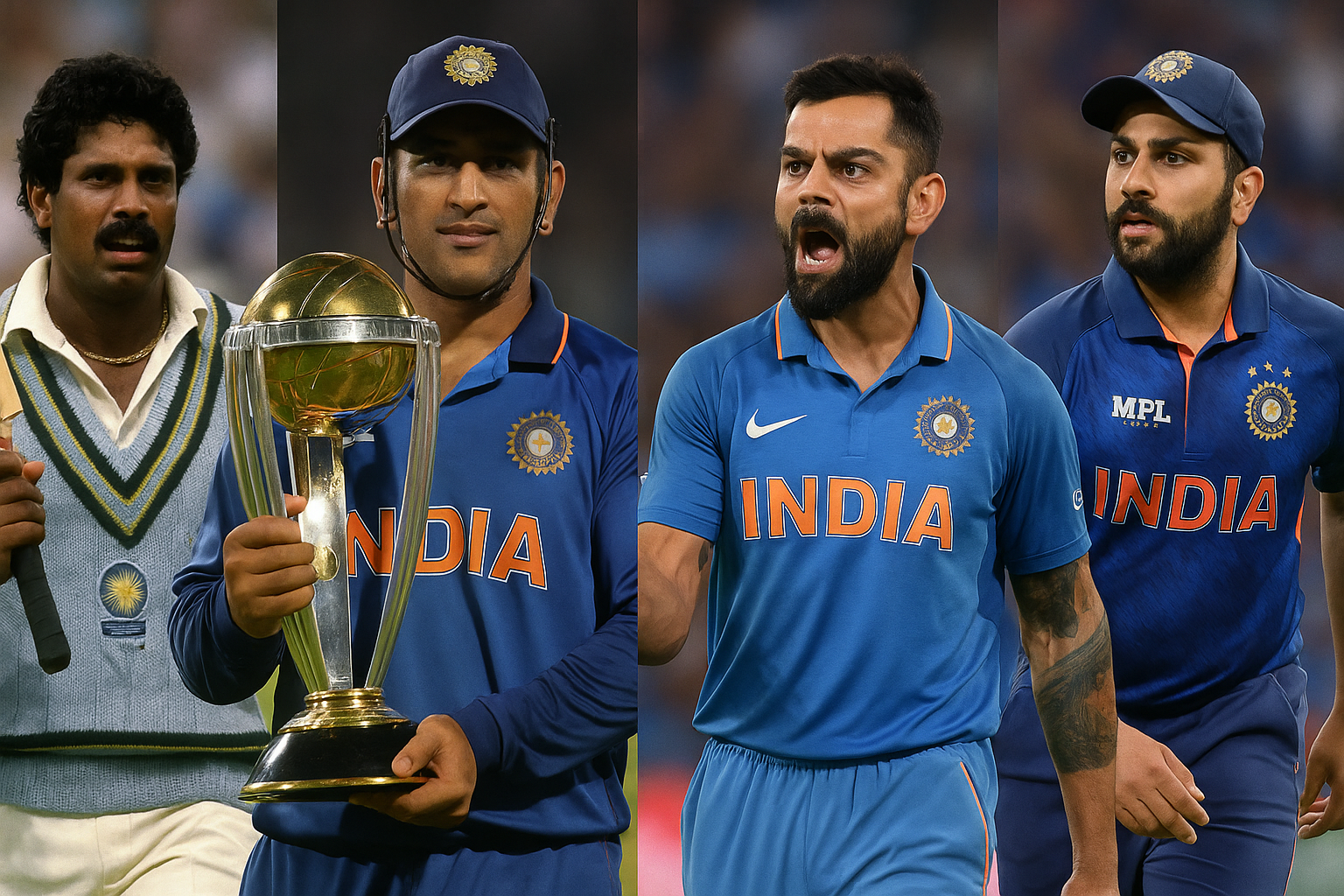
The India National Cricket Team stands as one of the most dominant and celebrated teams in the history of world cricket. Representing more than a billion passionate fans, the team’s journey from its humble beginnings in 1932 to its modern-day supremacy has been nothing short of extraordinary. The India National Cricket Team has evolved through decades of struggle, triumph, transformation, and glory, creating legends and memories that define the spirit of the game itself.
Table of Contents
The Early Days of the India National Cricket Team
The India National Cricket Team made its Test debut in 1932 against England at Lord’s, marking the beginning of a new era for Indian sports. Though victory eluded them in the early years, those formative decades helped shape a team that learned to fight against the odds. Cricket in India was more than a sport — it became a unifying force that transcended regional, linguistic, and social barriers.
In the years leading up to independence, the team was known for its raw talent and resilience. Players like C.K. Nayudu, Lala Amarnath, and Vijay Merchant laid the foundation upon which future generations would build a cricketing empire.
The Rise of Indian Cricket in the Modern Era
The transformation of the India National Cricket Team truly began in the 1970s and 1980s. Under the leadership of legends like Sunil Gavaskar and Kapil Dev, Indian cricket developed a fearless and competitive spirit. The defining moment came in 1983, when Kapil Dev led India to its first-ever Cricket World Cup victory at Lord’s. That triumph changed everything — it turned cricket into a national obsession and gave rise to a generation of dreamers.
The team’s success in the 1980s and 1990s was further fueled by icons like Sachin Tendulkar, Sourav Ganguly, Rahul Dravid, Anil Kumble, and VVS Laxman. These players not only set new records but also redefined professionalism and discipline in Indian cricket.
The Golden Era Under Dhoni and Kohli
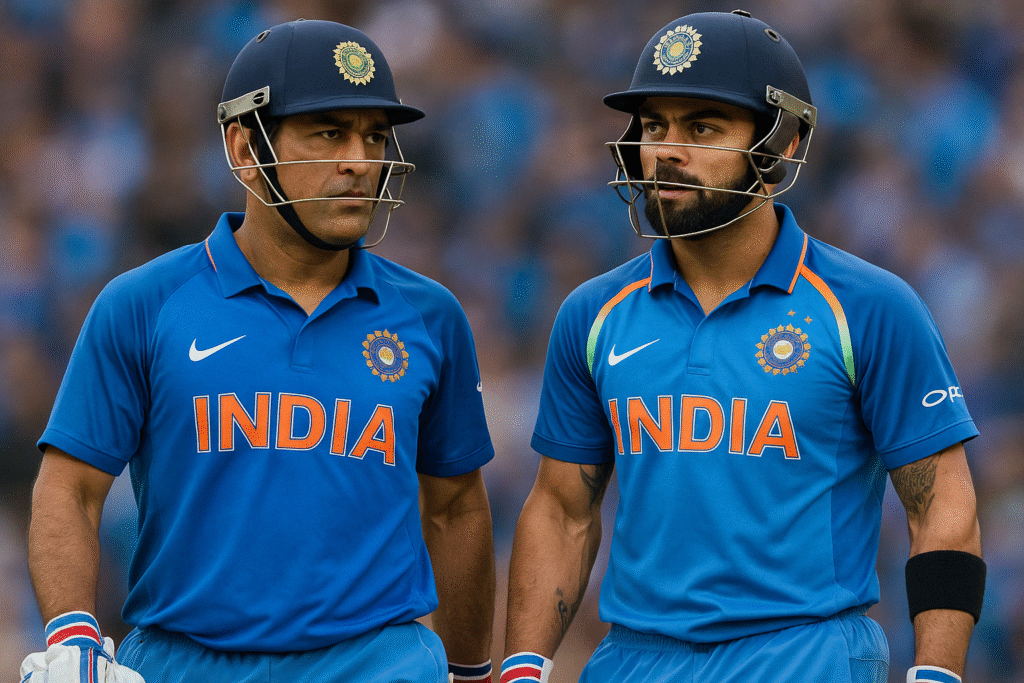
The 2000s marked a golden period for the India National Cricket Team. Under Sourav Ganguly’s aggressive leadership, India learned to win overseas and fight with pride. This era laid the groundwork for the dominance that would follow.
Then came Mahendra Singh Dhoni, a calm and tactical genius who led the team to unmatched success. Under Dhoni’s captaincy, India won:
- The 2007 ICC T20 World Cup,
- The 2011 ICC Cricket World Cup, and
- The 2013 ICC Champions Trophy.
Dhoni’s leadership turned India into a modern cricket powerhouse — strategic, confident, and unshakeable under pressure.
After Dhoni, Virat Kohli carried the torch, bringing unmatched aggression and fitness standards to the team. Kohli’s era saw India dominate world cricket in Tests, achieving the No.1 ICC ranking for a record duration and winning series overseas in Australia and England.
India National Cricket Team in Test Cricket
In Test cricket, the India National Cricket Team has evolved into one of the strongest sides globally. The balance between seasoned players and emerging talents has ensured India’s continued success. Players like Virat Kohli, Rohit Sharma, Ravichandran Ashwin, Jasprit Bumrah, and Cheteshwar Pujara have made India nearly unbeatable at home, while young guns like Shubman Gill and Yashasvi Jaiswal are shaping the future.
The team’s ability to win Test series in Australia (2021 and 2023) and challenge the best teams abroad has solidified its reputation as a modern-day powerhouse.
India National Cricket Team in Limited-Overs Formats
When it comes to ODIs and T20s, the India National Cricket Team is a blend of flair, power, and strategy. India’s success in white-ball cricket has been built on a combination of explosive batting, sharp fielding, and intelligent bowling variations.
The dominance of players like Rohit Sharma, KL Rahul, Hardik Pandya, and Suryakumar Yadav has made India one of the most feared teams in limited-overs formats. Rohit Sharma’s record-breaking double centuries and Suryakumar’s innovative stroke play exemplify India’s modern attacking style.
The Role of the Indian Premier League (IPL)
The creation of the Indian Premier League (IPL) in 2008 revolutionized not only Indian cricket but the global cricket economy. The IPL provided a platform for young Indian players to gain exposure and confidence while playing alongside and against the world’s best cricketers.
Thanks to the IPL, the India National Cricket Team now boasts an incredible bench strength — capable of fielding two competitive teams simultaneously. Emerging stars like Shubman Gill, Ruturaj Gaikwad, and Arshdeep Singh are living examples of how the IPL has shaped India’s cricketing future.
Coaching and Support Staff Excellence
Behind every successful team lies an equally strong support system. Coaches like Gary Kirsten, Ravi Shastri, and Rahul Dravid have played vital roles in shaping the India National Cricket Team. From mental conditioning to skill refinement, their leadership has created a culture of discipline, self-belief, and consistency.
Rahul Dravid, the current head coach, emphasizes process-driven cricket — a philosophy that encourages players to focus on improvement rather than outcomes. This mindset has been key to maintaining India’s dominance across all formats.
Women’s Cricket: The Other Blue Brigade
The success of the India National Cricket Team has inspired a parallel rise in women’s cricket. The Indian Women’s National Cricket Team, led by legends like Mithali Raj, Jhulan Goswami, Harmanpreet Kaur, and Smriti Mandhana, has gained global respect. Their performances in the ICC tournaments and the introduction of the Women’s Premier League (WPL) are changing the face of Indian cricket forever.
The Future of the India National Cricket Team
The future of the India National Cricket Team looks brighter than ever. With a mix of experience and youth, the team is poised to achieve new milestones. The next generation — featuring talents like Yashasvi Jaiswal, Rinku Singh, and Shubman Gill — promises continuity and excellence.
India’s focus on fitness, data-driven strategy, and player management ensures a balanced and forward-looking approach. With the 2027 World Cup on the horizon, fans are once again dreaming of blue confetti raining down in celebration.
Conclusion
The story of the India National Cricket Team is not just about cricket — it’s about pride, passion, and perseverance. From the dusty grounds of Bombay to the grand stadiums of Melbourne, India’s cricketers have carried the hopes of a nation and written a glorious saga in blue.
Every run, wicket, and victory represents a chapter in a journey that continues to inspire millions. The India National Cricket Team has proven time and again that with belief, teamwork, and resilience, even the wildest dreams can come true.