
Bajaj Auto was standing at a crossroads when a single bold decision reshaped its future—and gave birth to one of India’s most iconic motorcycles. In this in-depth business case study, we explore how strategy, timing, and risk-taking helped Bajaj Auto engineer a turnaround that many thought was impossible.
Bajaj Auto did not always enjoy the dominant, confident image it carries today. At the turn of the millennium, the company faced intense pressure from rising competitors, shifting consumer preferences, and a rapidly evolving two-wheeler market. What followed was not just a product launch, but a decisive strategic move that transformed the company’s destiny and redefined the Indian motorcycle segment.
This article breaks down that turning point—why it mattered, how it worked, and what modern businesses can learn from it.
Table of Contents
The Crisis Before the Comeback
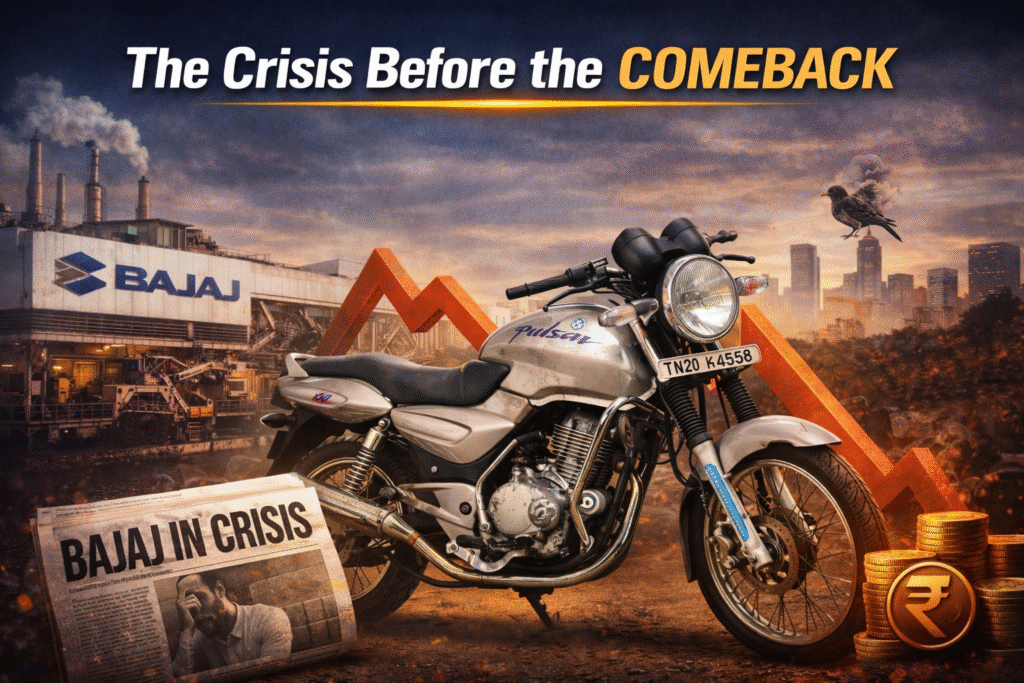
In the late 1990s and early 2000s, Bajaj Auto was struggling to keep pace with changing market dynamics. The Indian two-wheeler industry was moving away from utilitarian commuter bikes toward more stylish, performance-oriented machines. Younger buyers wanted speed, aggression, and personality—qualities that were missing from much of Bajaj’s lineup at the time.
Competitors had begun to capture mindshare, and brand perception became a serious challenge. Despite strong manufacturing capabilities and a wide dealer network, the company risked becoming irrelevant to the most important customer segment: India’s youth.
Internally, leadership recognized a harsh truth—incremental upgrades would not be enough. The company needed a radical shift.
Bajaj Auto and the Bold Strategic Decision
Betting on a New Identity
The single decision that saved Bajaj Auto was its commitment to creating a completely new motorcycle brand—one that would stand for power, performance, and attitude. Instead of tweaking existing commuter models, the company chose to design a bike from the ground up.
This was a risky move. Developing a new platform required heavy R&D investment, marketing confidence, and the courage to challenge established segment norms. Failure would have been costly, both financially and reputationally.
Yet, leadership believed that playing safe was no longer an option.
Building a Product, Not Just a Motorcycle
The creation of Pulsar was not treated as a routine product launch. Bajaj Auto approached it as a brand-building exercise.
Key principles guided development:
- Focus on performance rather than mileage alone
- Aggressive styling inspired by global trends
- Features that appealed emotionally to young riders
- A name that sounded powerful and aspirational
This approach marked a fundamental shift in how the company thought about motorcycles—not as mere transportation tools, but as lifestyle statements.
Bajaj Auto Launches Pulsar: A Market Disruption

When Pulsar entered the Indian market, it immediately stood apart. Its muscular design, higher engine capacity, and sporty stance broke conventions. More importantly, it gave Bajaj Auto a fresh voice in the market.
The messaging was clear: this was a bike for riders who wanted more than basic mobility.
Early adopters played a crucial role in spreading the word. Word-of-mouth, combined with bold advertising, helped Pulsar become a cultural phenomenon rather than just another two-wheeler.
How Pulsar Rebuilt Bajaj Auto’s Brand Image
Before Pulsar, the brand was often associated with practicality and value. After Pulsar, Bajaj Auto became synonymous with performance and innovation.
This shift delivered multiple benefits:
- Strong emotional connection with younger consumers
- Improved pricing power across the portfolio
- Increased showroom footfall for other models
- Renewed confidence among dealers and partners
The success of Pulsar proved that Indian consumers were ready to embrace premium features—if presented with the right narrative.
Bajaj Auto and the Power of Segmentation
One of the smartest elements of the strategy was segmentation. Instead of positioning Pulsar as a mass commuter, Bajaj Auto carved out a new “sports commuter” category.
This allowed the company to:
- Avoid direct price wars
- Command higher margins
- Build a long-term brand franchise
Over time, the Pulsar lineup expanded into multiple variants, ensuring that the brand stayed relevant across different age groups and budgets.
Scaling Success Without Losing Identity
Many brands lose focus after initial success. Bajaj Auto avoided this trap by carefully evolving Pulsar while preserving its core DNA.
Each update balanced:
- Performance improvements
- Design refreshes
- New technology additions
Yet the essence remained unchanged—Pulsar was always positioned as bold, powerful, and youthful. This consistency helped build trust and loyalty over decades.
Financial Impact of the Pulsar Decision
From a business perspective, the Pulsar strategy strengthened Bajaj Auto on multiple fronts:
- Higher profitability per unit
- Better utilization of manufacturing capacity
- Stronger export potential
- Reduced dependence on low-margin segments
The decision also gave the company confidence to innovate further, influencing future product strategies across motorcycles and three-wheelers.
Lessons Modern Businesses Can Learn from Bajaj Auto
The Pulsar story offers valuable insights for founders, marketers, and strategists:
- Reinvention beats incremental change when markets shift
- Brand perception can be transformed with the right product
- Risk is unavoidable during meaningful turnarounds
- Understanding your core audience is more important than copying competitors
- Long-term vision matters more than short-term comfort
These lessons extend far beyond the automotive industry.
Why This Decision Still Matters Today
Even today, Pulsar remains one of the most recognizable motorcycle brands in India. Its success continues to influence how Bajaj Auto approaches innovation, branding, and market expansion.
What began as a risky gamble became a blueprint for corporate revival—proving that one well-timed decision, backed by conviction, can redefine an entire organization.
Final Thoughts
The story of how Bajaj Auto created Pulsar is not just about motorcycles—it’s about leadership, courage, and understanding the pulse of the market. When faced with decline, the company chose transformation over caution.
That single decision did more than save a business. It created a legacy.
If you’re studying business turnarounds, brand strategy, or product-led growth, this case stands as a powerful reminder: sometimes, one bold move is all it takes to change everything.