Amul is more than just a dairy brand; it’s a symbol of India’s self-reliance, unity, and rural empowerment. From humble beginnings in a small town in Gujarat to becoming a billion-dollar enterprise, Amul’s journey is an inspiring story of how collective effort, trust, and innovation can build an empire — even without external investors.
Table of Contents
The Birth of Amul – A Cooperative Revolution
The story of Amul began in 1946, in the small town of Anand, Gujarat. Back then, local milk producers were exploited by middlemen who paid them unfair prices. The farmers decided to take charge of their destiny and formed a cooperative society under the leadership of Tribhuvandas Patel, with the visionary guidance of Dr. Verghese Kurien, later known as the Milkman of India.
The name “Amul” comes from the Sanskrit word Amulya, meaning priceless. True to its name, Amul became priceless not only for India’s dairy industry but also for millions of rural families whose livelihoods it transformed.
This cooperative movement soon became the foundation of India’s White Revolution, turning the nation from a milk-deficient country into the world’s largest milk producer.
Amul’s Business Model: The Power of Cooperation
The success of Amul lies in its unique cooperative business model, which connects over 3.6 million dairy farmers directly to the brand. Unlike conventional corporations that rely on investors or shareholders, Amul’s profits flow back to the farmers who supply the milk.
Here’s how the model works:
- Village Dairy Cooperatives collect milk from local farmers.
- District Unions process and package the milk.
- State Federations (like GCMMF – Gujarat Cooperative Milk Marketing Federation) market the products under the Amul brand.
This three-tier structure ensures transparency, fair pricing, and empowerment, keeping control in the hands of the producers themselves. Every farmer is both a supplier and a stakeholder in the business.
Through this system, Amul not only eliminated middlemen but also created a sustainable ecosystem where profits were reinvested into rural communities instead of corporate pockets.
From Local Dairy to Billion-Dollar Brand
From its modest start, Amul has grown into one of India’s biggest FMCG (Fast-Moving Consumer Goods) brands, valued at over $10 billion. It operates in every corner of India and exports to more than 50 countries, offering a wide range of dairy and food products.
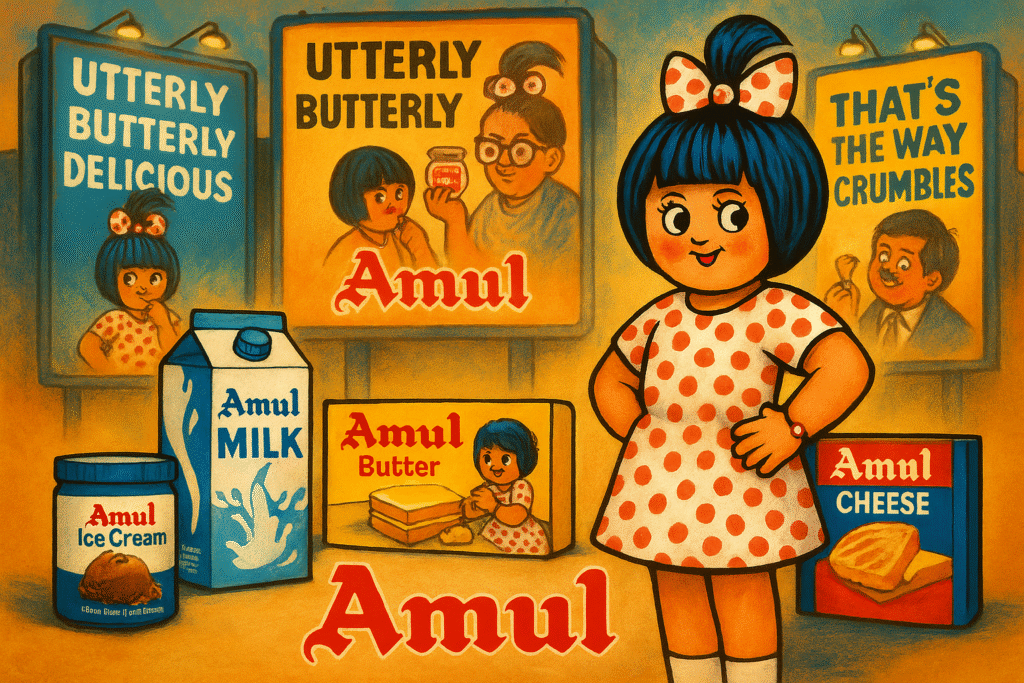
Its product line includes Amul Milk, Butter, Cheese, Ice Cream, Ghee, Paneer, and even Chocolates — each maintaining consistent quality and affordability.
Amul’s expansion wasn’t fueled by investors or venture capital; it was powered by innovation, trust, and farmer participation. Every liter of milk sold helped improve the life of a farmer — making Amul not just a brand, but a movement.
Marketing Genius – The Amul Girl Phenomenon

When we think of Amul, one image immediately comes to mind — the Amul Girl. Introduced in 1966, this lovable cartoon mascot has appeared in witty and satirical advertisements commenting on current events, sports, and politics.
These ads became part of India’s pop culture, earning Amul a reputation for being creative, relatable, and patriotic. Without massive marketing budgets, Amul achieved what few brands could — brand loyalty through humor and honesty.
Each campaign reinforced Amul’s values: quality, affordability, and a voice that represents the common Indian.
Social Impact – Empowering Rural India
The cooperative model of Amul didn’t just generate profits; it empowered millions of farmers, especially women in rural India.
By giving them direct access to markets and fair returns for their milk, Amul transformed entire villages. Today, it supports 3.6 million milk producers and collects over 25 million liters of milk daily.
Through skill development, veterinary care, and community programs, Amul helped rural families achieve financial independence, thereby strengthening India’s rural economy.
This grassroots empowerment is what makes Amul not just a business story but a social revolution.
Amul’s Success Secrets
The rise of Amul offers timeless business lessons for entrepreneurs and marketers alike.
- Trust the People Behind the Product: Amul’s foundation lies in empowering farmers, not exploiting them.
- Quality Never Compromised: From milk to butter, Amul ensures top standards in every product.
- Consistency is Key: Amul has maintained its brand identity and pricing stability for decades.
- Innovation with Purpose: From tetra-packs to ready-to-drink beverages, Amul constantly evolves.
- Marketing with Meaning: The Amul Girl campaigns made serious topics engaging and human.
Every business can learn from Amul’s cooperative spirit — success doesn’t always require investors; sometimes, it requires shared purpose and trust.
Amul Today – A Global Dairy Powerhouse

Today, Amul stands as one of the largest dairy brands in Asia, competing with multinational giants like Nestlé and Danone. Its revenue has crossed ₹80,000 crore (≈ $10 billion), and it continues to expand into new markets and product categories.
Despite its massive scale, Amul still holds true to its roots — owned by farmers, run for farmers. The brand’s resilience during market fluctuations, global crises, and technological shifts proves the strength of its cooperative DNA.
Amul also plays a leading role in India’s digital transformation in dairy, using data and automation to improve supply chains and quality control.
Conclusion – The Taste of India, The Spirit of Success
The journey of Amul from farmers to fortune is not just a business case — it’s a story of faith, empowerment, and purpose.
While most billion-dollar brands rely on investors, Amul relied on its people. By combining rural values with modern management, Amul showed the world that true success is measured not by profits alone, but by the number of lives uplifted.
From being a small cooperative in Anand to a global dairy powerhouse, Amul continues to live up to its tagline:
“The Taste of India.”