FIFA Women’s World Cup is not just a football tournament — it’s a celebration of determination, equality, and the rise of women in global sports. Since its inception in 1991, the FIFA Women’s World Cup has transformed from a modest competition into one of the most-watched sporting events in the world. This journey from 1991 to 2023 tells a story of passion, progress, and power.
Table of Contents
The Birth of the FIFA Women’s World Cup (1991)
The first FIFA Women’s World Cup took place in China in 1991, marking a historic milestone for women’s football. At that time, women’s football had limited recognition, and the idea of a world tournament was still new. However, FIFA took the bold step of organizing a global event, featuring 12 teams from across continents.
The United States emerged as the first champions, defeating Norway 2–1 in the final. This victory not only gave the U.S. its first title but also planted the seed for women’s football to flourish worldwide.
Norway’s Golden Era (1995)
The second edition of the FIFA Women’s World Cup was held in Sweden in 1995. This time, Norway took revenge for their previous defeat and claimed the trophy by beating Germany 2–0 in the final. Norway’s win proved that the competition was not dominated by one nation — and that European teams were quickly closing the gap.
The American Revolution (1999)
The 1999 FIFA Women’s World Cup in the United States marked a turning point for the sport. Hosted in front of packed stadiums — including the record-breaking 90,000 spectators at the Rose Bowl — it became a cultural phenomenon.
The image of Brandi Chastain celebrating her winning penalty kick against China became an iconic moment in sports history. The U.S. Women’s National Team (USWNT) captured hearts and headlines, inspiring millions of young girls around the world.
Germany’s Dominance (2003–2007)
The early 2000s belonged to Germany, who lifted the FIFA Women’s World Cup trophy twice in a row — 2003 (USA) and 2007 (China). Led by stars like Birgit Prinz, Germany showcased discipline, structure, and technical excellence.
In 2003, they defeated Sweden 2–1 in extra time, and in 2007, they crushed Brazil 2–0, becoming the first nation to win back-to-back titles. These victories strengthened Europe’s dominance in women’s football.
Japan’s Fairytale Triumph (2011)
In 2011, the FIFA Women’s World Cup was hosted by Germany, and it witnessed one of the most emotional victories in sports history. Japan, still recovering from a devastating earthquake and tsunami, stunned the world by defeating the United States in a dramatic final.
Their victory in the penalty shootout symbolized hope and resilience — making Japan the first Asian country to win the FIFA Women’s World Cup.
The U.S. Comeback and Global Expansion (2015–2019)
The 2015 FIFA Women’s World Cup in Canada was historic for many reasons — it featured 24 teams, the most ever at that time, reflecting the sport’s global growth. The United States reclaimed their dominance, defeating Japan 5–2 in the final. Carli Lloyd’s hat-trick within the first 16 minutes became legendary.
Four years later, in 2019, the FIFA Women’s World Cup moved to France, and the U.S. team once again proved unstoppable. Led by Megan Rapinoe and Alex Morgan, the Americans beat the Netherlands 2–0 in the final, securing their fourth title — the most by any team in women’s football history.
The 2023 Revolution: Spain’s Moment of Glory
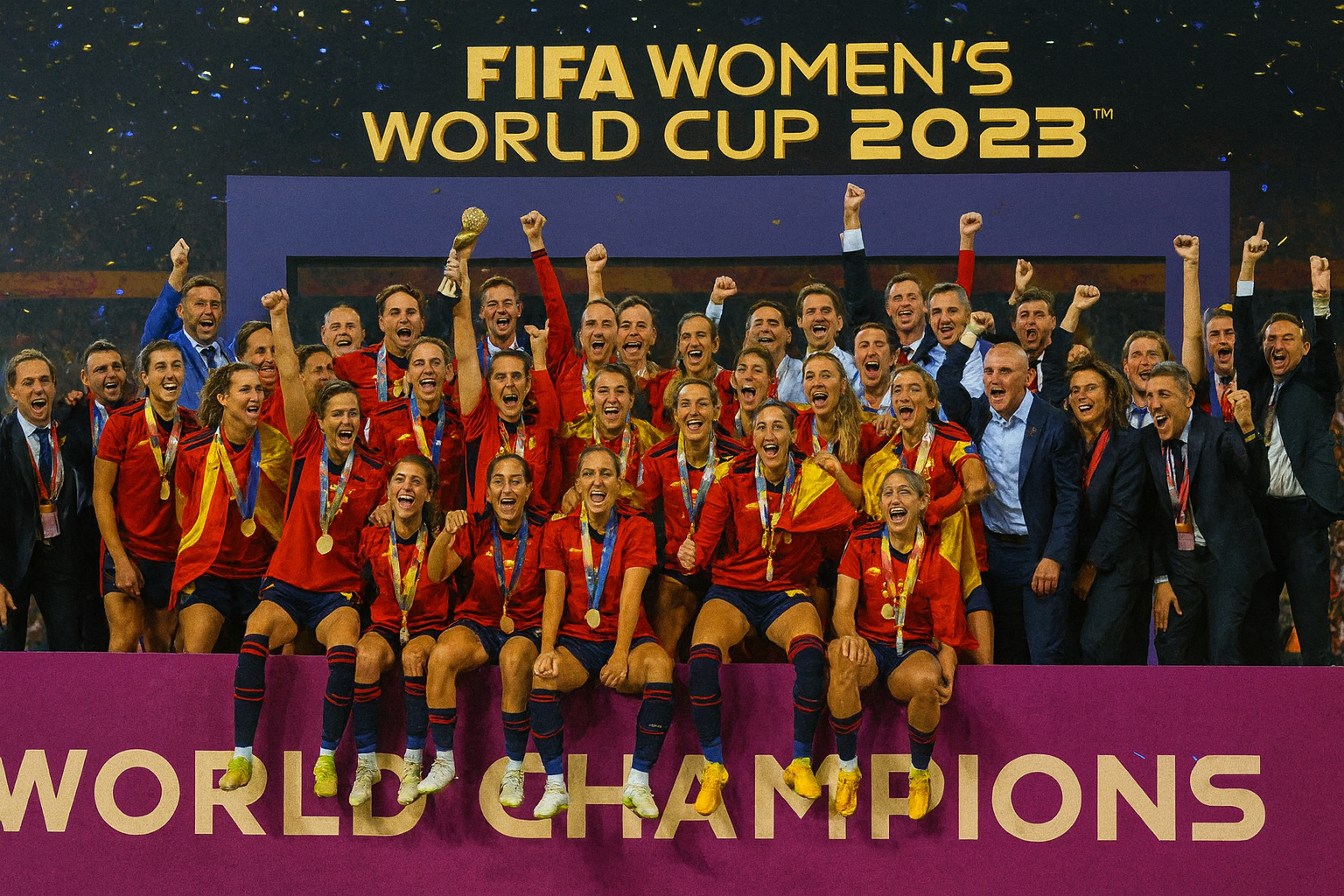
The 2023 FIFA Women’s World Cup, co-hosted by Australia and New Zealand, broke all records in attendance and viewership. It showcased the depth of talent and competitiveness across continents.
For the first time, Spain emerged as the champions, defeating England 1–0 in the final. Spain’s victory represented a new era — one led by technical skill, youth power, and tactical brilliance. It also highlighted how women’s football has evolved beyond traditional powerhouses like the USA and Germany.
Growth Beyond the Pitch
The growth of the FIFA Women’s World Cup is not limited to football. It has become a global movement for gender equality, visibility, and opportunity. From prize money increases to broadcasting rights and sponsorships, the tournament has gained massive commercial value.
FIFA has also focused on expanding participation, encouraging more nations to develop women’s football infrastructure. The visibility of players like Marta (Brazil), Sam Kerr (Australia), and Alexia Putellas (Spain) has turned them into international icons, inspiring the next generation.
Challenges and the Road Ahead
Despite progress, challenges remain. Wage inequality, limited media coverage, and lack of investment in grassroots football are still barriers for many nations. However, the growing success of the FIFA Women’s World Cup shows that change is inevitable.
The 2027 edition promises to be even bigger, with FIFA planning to introduce more teams, advanced technology, and global youth programs. The mission is clear — to make women’s football as powerful, respected, and celebrated as the men’s game.
Legacy of the FIFA Women’s World Cup
The legacy of the FIFA Women’s World Cup extends far beyond trophies. It represents empowerment, unity, and inspiration. From the pioneers of 1991 to the champions of 2023, every player has contributed to rewriting the story of women in sports.
What began as a small event in China has now become a global spectacle — watched by millions and loved by all. The tournament’s history is proof that when women are given a platform, they don’t just play the game — they change it forever.
Conclusion
The FIFA Women’s World Cup has traveled an extraordinary path from 1991 to 2023. Each edition has added a new chapter to football history — filled with emotion, excellence, and empowerment. As the sport continues to grow, one thing is certain: the FIFA Women’s World Cup is not just about football — it’s about the unstoppable spirit of women who dared to dream and conquered the world.