Blinkit has become a household name in India’s quick commerce industry, transforming how urban consumers shop for groceries and essentials. From a small grocery delivery startup known as Grofers to a billion-dollar quick delivery brand rebranded as Blinkit, its journey is filled with smart marketing strategies, powerful brand positioning, and innovative customer engagement.
In this article, we’ll break down Blinkit’s marketing strategy, explore what makes it successful, and identify key lessons for startups aiming to grow in a competitive digital market.
Table of Contents
1. Blinkit’s Rebranding Strategy – A Bold and Smart Move
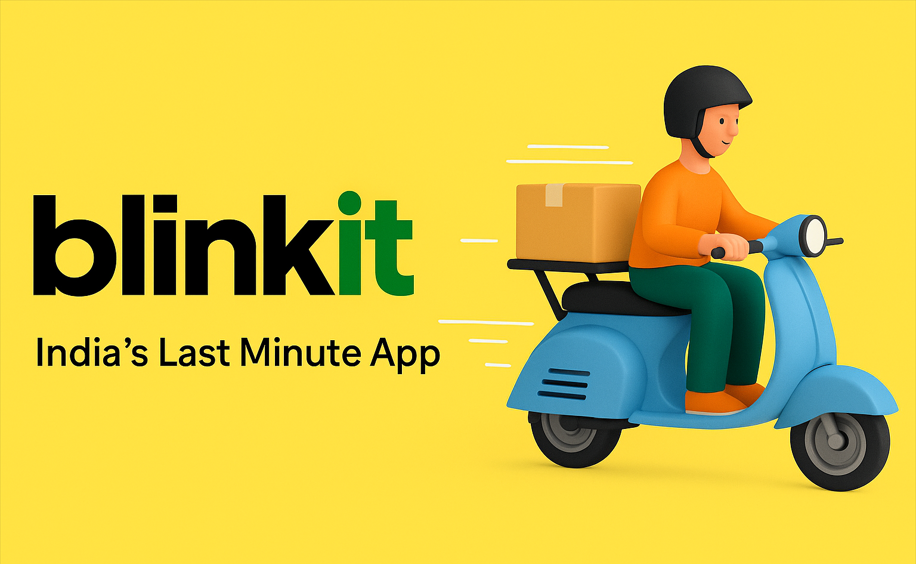
When Blinkit decided to rebrand from Grofers in 2021, it wasn’t just a name change — it was a complete strategic repositioning. The word “Blinkit” perfectly aligns with the brand’s promise: to deliver in a blink.
- Psychological Branding: The name instantly communicates speed and efficiency, appealing to modern consumers who value time more than anything.
- Color Psychology: Blinkit adopted a bright yellow and black color palette — energetic, youthful, and easily noticeable among competitors.
- Unified Visual Identity: The logo, typography, and app interface were redesigned to reflect simplicity and modernity — important for brand recall.
Lesson for startups: Branding is more than just a name. It’s about communicating your mission and customer promise through visuals, tone, and design.
2. Customer-Centric Marketing – Understanding the Urban Consumer
Blinkit’s marketing strategy revolves around one core principle — understanding the customer deeply. Blinkit recognized that urban consumers face two major problems: lack of time and last-minute grocery needs.
So, the brand positioned itself as the “instant grocery solution.”
Key tactics include:
- Micro-Market Targeting: Blinkit doesn’t market to everyone. It focuses on high-demand areas where customers are willing to pay for convenience.
- Personalized Offers: The app uses behavioral data to show personalized discounts, product suggestions, and reorder reminders.
- Local Store Partnerships: Instead of building its own warehouses everywhere, Blinkit collaborates with local vendors and “dark stores” to ensure faster delivery.
Lesson for startups: The key to success is solving one major pain point for a well-defined audience. Don’t try to serve everyone.
3. The “Quick Commerce” Positioning – Creating a New Category
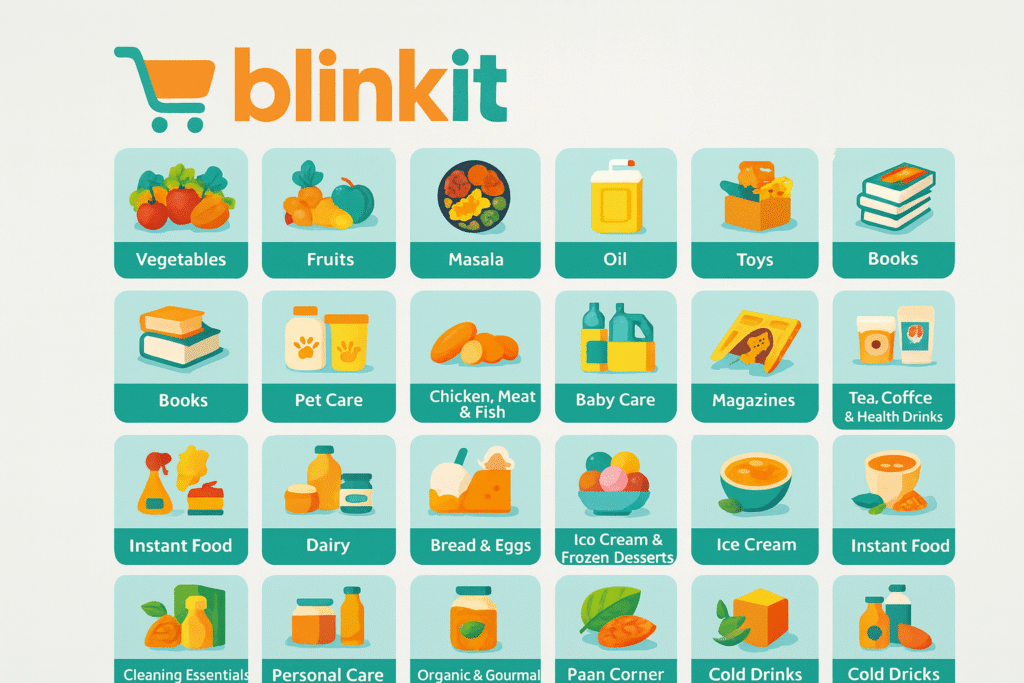
Before Blinkit, no major player had claimed the “10-minute delivery” space in India. Blinkit didn’t just compete in the grocery segment — it created a new market category: Quick Commerce (Q-Commerce).
Their marketing slogan “Everything delivered in minutes” became synonymous with instant gratification.
They used powerful communication channels to build trust:
- Consistent Messaging: Every ad, push notification, and campaign reinforced the brand promise of speed.
- App Store Optimization: Blinkit optimized its listings with keywords like “fast grocery delivery” and “instant essentials.”
- Emotional Connection: Campaigns often highlighted real-life scenarios — like running out of milk, snacks, or vegetables — making the service relatable.
Lesson for startups: If you can’t dominate an existing category, create a new one. Be the first to define the rules.
4. Blinkit’s Digital Marketing Strategy – Data, Content & Social Media
A huge part of Blinkit’s marketing strategy lies in its digital-first approach. The brand focuses on high-impact online campaigns rather than traditional advertising.
a. Social Media
Blinkit’s Twitter (now X) and Instagram handles are goldmines of witty, relatable content. They use meme marketing and real-time engagement to stay relevant.
Examples:
- During cricket matches, Blinkit posts “Delivered faster than your favorite player’s fifty!”
- For trending events, they create quick memes that blend humor with brand promotion.
b. Influencer Collaborations
Blinkit collaborates with lifestyle and comedy influencers to promote its convenience in a fun, organic way.
c. Performance Marketing
Blinkit uses AI-based targeting to push app installs, cart completions, and reorders through Google Ads, Meta Ads, and programmatic platforms.
Lesson for startups: Don’t just sell — entertain, engage, and educate. Digital content that makes people smile builds stronger recall than aggressive ads.
5. Blinkit’s Hyperlocal Marketing Approach
Another major highlight of Blinkit’s marketing strategy is its hyperlocal execution.
Instead of running one national campaign, Blinkit adapts its communication for each city or even neighborhood:
- Offers tailored to local festivals (like Ganesh Chaturthi in Mumbai or Pongal in Chennai).
- Region-specific language in app notifications and ads.
- Local product availability based on preferences.
Lesson for startups: Local relevance beats global glamour. Adapt your marketing tone, language, and offers to connect emotionally with specific audiences.
6. Blinkit’s Partnerships and Cross-Promotions
Blinkit has partnered with major brands like Unilever, Coca-Cola, and Zomato (its parent company) to enhance reach.
Some creative collaborations include:
- Zomato + Blinkit Integration: Zomato’s app cross-promotes Blinkit for instant grocery needs.
- Co-branded Campaigns: FMCG giants run exclusive offers only available on Blinkit, making it a preferred retail partner.
Lesson for startups: Strategic partnerships can amplify your brand faster than solo efforts. Find complementary allies.
7. The Power of Technology and Data
Behind Blinkit’s marketing strategy lies robust data analytics and AI. Blinkit uses predictive algorithms to:
- Forecast what items are likely to be ordered next.
- Optimize dark store inventory.
- Automate delivery routing for maximum efficiency.
Lesson for startups: Combine marketing creativity with data-driven insights. Data doesn’t replace emotion — it enhances it.
8. Customer Retention and Loyalty Marketing
Blinkit knows that acquiring users is expensive — so it focuses heavily on retention.
Retention strategies include:
- Gamified Discounts: Scratch cards, spin-the-wheel offers, and referral points.
- Push Notifications: Smartly timed reminders like “Need milk again?”
- Instant Refunds: A fast, no-questions refund process builds trust.
Lesson for startups: Retaining one customer is cheaper and smarter than acquiring five new ones.
9. Blinkit’s Content Marketing and Storytelling
Even with its fast delivery promise, Blinkit’s marketing strategy humanizes the brand through storytelling. Their blog and social media often feature:
- Tips for healthy living, quick recipes, and home organization.
- Behind-the-scenes stories from delivery partners.
- Emotional ads showing Blinkit’s role in everyday moments.
Lesson for startups: People connect with stories, not sales pitches. Build narratives that reflect real human experiences.
10. What Startups Can Learn from Blinkit
Here are the biggest takeaways for startups inspired by Blinkit’s marketing strategy:
- Rebrand with purpose – Every element must reflect your brand’s mission.
- Be fast and focused – Speed is the new currency in the digital age.
- Leverage humor and relatability – Especially on social media.
- Use data to personalize marketing – Not all customers need the same offer.
- Build ecosystems, not just businesses – Partnerships make you scalable.
Conclusion
Blinkit has revolutionized quick commerce in India not just through logistics — but through brilliant marketing execution. Every campaign, push notification, and design choice echoes one message: Speed, simplicity, and satisfaction.
For startups, the biggest lesson from Blinkit’s marketing strategy is clear — define your promise, deliver it consistently, and connect with your audience on an emotional and cultural level.
Because in today’s world, consumers don’t just buy convenience — they buy trust and time.